Services off, inside, outside, then the hitch check again. How to pack up a rental caravan, what people forget, and how the Kampi deposit comes back.
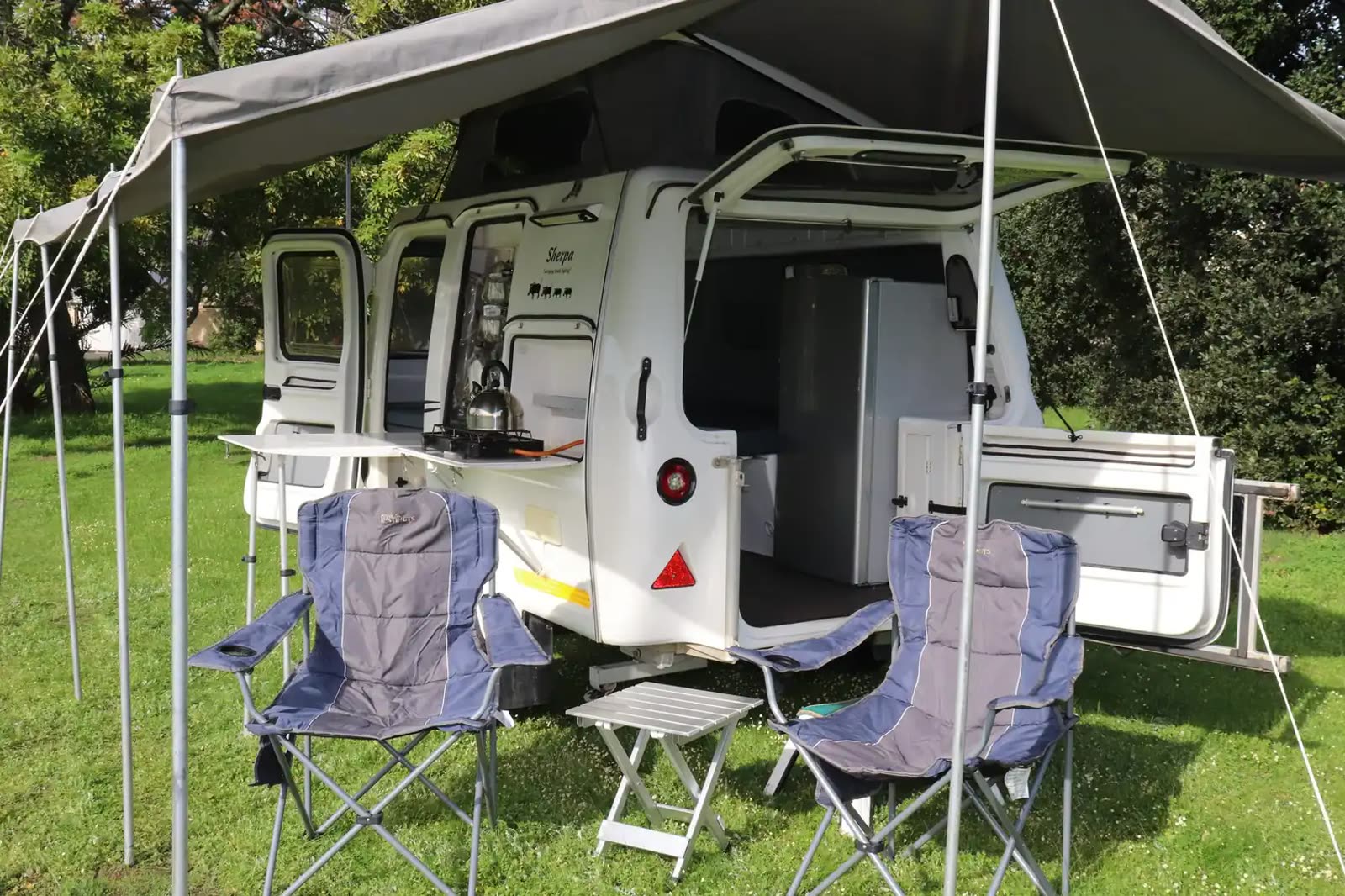
The last morning of a caravan trip has its own weather. Everyone is tired, someone has lost a shoe, the kids are already in the car asking how long, and there is a vague memory that checkout is at ten. This is exactly the moment the corner steadies get left down, the gas valve stays open and the chocks stay on the grass.
Packing up is setting up in reverse, with one rule on top: nothing goes home wet.
This is post seven in our weekly series built on Kampi Guides, the free library for first-time caravan renters, and the last of the renter guides. We have gone from what you may tow and the drive through collecting, reversing, setting up and living in the caravan. This week: packing up and returning the caravan. In Afrikaans: Oppak en teruggee.
Services off, inside packed, outside packed, then the full hitch check, exactly the one you did on collection day. Canvas first, because it takes the longest to dry. Last of all, a slow walk around the outfit before you pull off.
Check the weather the night before. If rain is coming in the morning, drop the awning in the evening while it is still dry. Fighting wet canvas down in a gust is worse than one night without it.
"Pack up the night before as far as you can," says JP Voogt, Kampi's founder. "The last morning is the worst time to think, so do the thinking when you still have a glass of wine in your hand and daylight to see by."
A cupboard that pops open on the N1 puts the coffee mugs on the floor first and on the owner's inspection form second. Latch every cupboard, drawer and locker, not just push it shut. Close and latch roof hatches and windows. Loose items go low or in the tow vehicle. Sweep, wipe, empty the bin, and check under the seats and in the cubbies for your own things.
Walk the checklist in the same direction every time, say clockwise from the door. On the last morning a fixed route catches what memory will not.
Corner steadies are the thing people forget most. A steady grinding along the tar for 200 km before anyone notices is the classic pack-up failure, and you will hear about it at handover.
If the rain leaves you no choice but to pack the canvas wet, tell the owner the moment you hand over. Mildew starts within 48 hours. It eats the waterproofing and leaves a smell that never comes out. If the weather gives you any chance at all, air the canvas dry before you fold it.
You did this at collection with the owner standing next to you. Now you are on your own, so go slower. Handbrake fully off. Coupling locked, and the lift test done. Breakaway cable clipped to the towbar eye. Jockey wheel up and clamped. Plug in, and a second person confirms brake, indicator and tail lights. Tyre pressures set cold. Extension mirrors fitted. Chocks in the locker, not on the grass.
The full walk-through is on the collecting your caravan page. If you had a caravan wheel off during the trip, re-check the wheel nut torque after the first 50 km home.
On the drive home nothing changes except that you are tired. Keep the five to six second gap, stay at or below 100 km/h, and stop every two hours or 200 km for a hand on each hub. The detail is in our towing post.
The return is the collection handover run backwards. Kampi sends both of you a post-trip form that mirrors the one you signed at collection: condition photos, damage notes and the equipment inventory.
Kampi holds the deposit, never the owner, and it comes back automatically if no damage claim is filed within 72 hours of the return. If a claim is filed, both sides' photos are the evidence, and the assessment takes 5 to 10 working days. The detail is on our insurance and deposit page.
"The photo you took on collection day is worth more than any argument on return day," says JP. "Same panel, same angle, and the conversation takes thirty seconds."
Cleaning: nobody expects showroom standard. Swept out, fridge empty and grey water dumped is Kampi's own advice. Some owners set their own cleaning terms in the listing, so read those before you leave the campsite, and remember it ends up in your review.
Things break on caravans. A latch gives up, a water pump packs in. Owners know this. What they remember is whether you phoned. Tell the owner as soon as it happens, photograph it before and after any temporary fix, and put it on the return form. A fault you reported on day two reads very differently from one the owner finds at handover.
For anything that stops you driving, use the roadside assistance included in your booking, through the number on the roadside assistance page. A tow truck you found yourself may not be covered.
The corner steadies. The step, still folded out under the door. The mains lead, still plugged into the pedestal. The chocks, on the grass. The gas valve, still open. The cassette, still full. The handbrake, still on for the first 200 m. And their own phone charger, in the socket by the bed.
Keep the printed towing checklist in the cubby. Nobody is sharp on the last morning of a trip, and that is exactly when you need it. Our older departure checklist covers the packing side before you leave home.
Make the return easy to get right. Put your cleaning terms and your gas expectation in the listing, and do the return walk-around with the renter, not after they have left. Then give the caravan its between-bookings check. Next week's post, the last in the series, is written for you: the caravan maintenance checklist for owners who rent out.
That is the full trip, from licence disc to deposit. If you have read along, you have done more homework than most people who hitch up a caravan. Go and use it: find a caravan near you and book something for the December holidays.
Kampi Guides are general information, not legal advice. Check the regulations and your own vehicle's plate before you tow.