The Caravan Departure Checklist (Before You Leave Home and Before You Leave the Campsite)
Complete caravan departure checklist for South African campers. Inside, outside, towing setup, and documents to check before every trip. Print it, use it, stay safe.
This checklist exists because forgetting one thing can ruin your trip. A cupboard that flies open at 120km/h. A gas bottle left connected. Stabiliser legs that drag on the tar for 200km before anyone notices. All of it has happened, and all of it is avoidable.
Whether you own a camper, rent one through Kampi, or borrow your uncle's caravan once a year, the routine is the same. Walk through this list twice: once before you leave home, and once before you leave the campsite.
Before you leave home
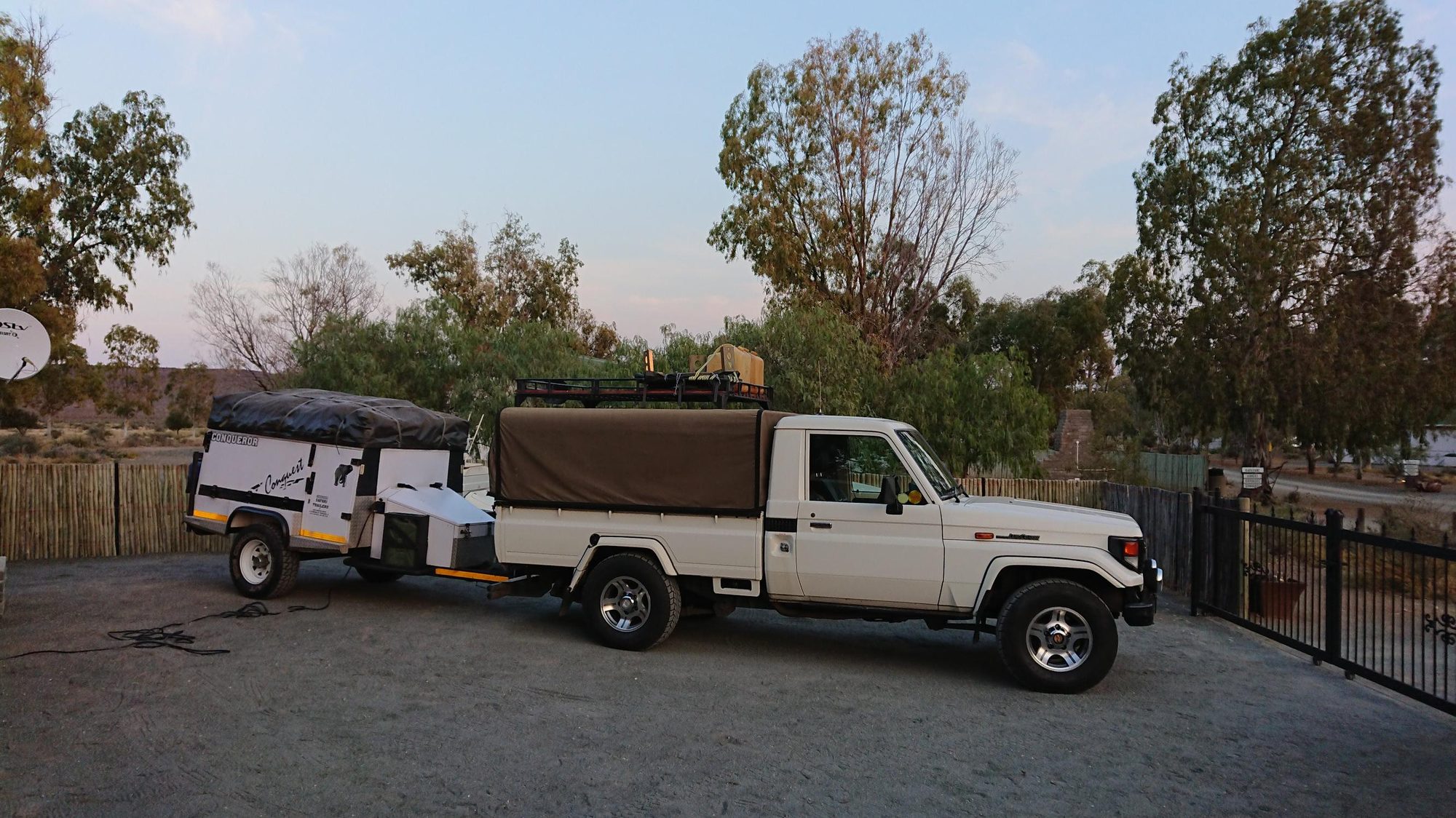
This is when you're hitching up the camper and heading to your destination. You're excited, the kids are screaming, and it's tempting to just hook up and go. Don't. Take ten minutes. Walk around. Check everything.
Inside the camper
- All cupboard doors closed and latched. Open one and push it. If it swings open, it will swing open on the road.
- Fridge door locked. Most caravan fridges have a travel latch. Use it.
- All windows closed and latched. Not just closed. Latched.
- Roof hatches and skylights sealed. Wind at highway speed will rip an open hatch right off.
- All loose items secured or packed in closed compartments. Anything that can slide, will slide.
- Stove and oven knobs in the off position.
- Water taps closed. A tap that vibrates open during the drive means you arrive to a flooded floor.
Outside the camper
- Outdoor storage compartments locked. Push each one to check.
- Awning fully retracted and secured. A loose awning at speed is a sail you didn't ask for.
- Stabiliser legs fully retracted and pinned. This is the one people forget most often. Check both sides.
- Power cable disconnected and stored. Don't leave it dangling.
- Water hose disconnected and drained.
- Gas bottle valve closed. If running a 3-way fridge on gas while driving (which some setups allow), confirm the bottle is secured and the regulator is tight.
- TV antenna lowered. If your camper has one, it will snap off at the first low bridge or tree branch.
- Step retracted. Easy to miss, easy to damage.
Towing setup
- Tow hitch properly seated and locked. Give it a proper tug. If the coupling lifts off the ball, it's not locked.
- Safety chains crossed under the coupling and connected to the tow vehicle. Crossed, not straight.
- Breakaway cable attached to the tow vehicle (separate from the safety chains).
- Jockey wheel fully raised and locked in the travel position.
- Handbrake released on the caravan.
- Electrical plug connected. Walk to the back and have someone press the brakes while you check brake lights, indicators, and tail lights. Both sides.
- Tyre pressure checked on all caravan tyres, including the spare. Check the tow vehicle's tyres too while you're at it.
- Wheel nuts tight. A quick check with a wheel spanner takes 30 seconds and could save your life.
- Load distribution even. If the caravan is nose-heavy or tail-heavy, redistribute weight before you drive.
Documents
- Your driver's license (physical card, not a photo on your phone).
- If the camper requires Code EB: confirm you have the correct license endorsement.
- Camper's license disc (check it's valid and displayed).
- Tow vehicle's license disc.
- Insurance details or confirmation of cover.
- If you're renting: the owner's contact number and any emergency contacts.
Before you leave the campsite
Packing up is the part nobody looks forward to. You're tired, you've had a good time, and you just want to get home. This is exactly when things get missed. Same discipline as the morning you left. Walk around, check everything.
Disconnect services first
- Unplug from the campsite power point. Stow the cable.
- Disconnect the water hose. Drain it and pack it separately from clean items.
- Close the gas bottle valve.
- If you used the grey water tank, drain it at the designated dump point. Not on the grass.
- If applicable, empty the chemical toilet at the dump station. Rinse it.
Inside pack-up
- Everything that came out goes back in. Utensils, bedding, towels, braai grids, the kettle someone left outside.
- All cupboards closed and latched (same as before you left home).
- Fridge: switch off if not running on gas for the drive. Lock the door in travel position.
- Sweep the floor. Shake out the rugs. A five-minute clean now saves a much worse job later.
- Windows and hatches closed and latched.
- Check under beds and in every cupboard. People leave chargers, clothes, and medication behind constantly.
Outside pack-up
- Awning retracted and secured.
- Chairs, tables, braai stands, and any outdoor gear packed and stowed.
- Stabiliser legs retracted. Again: both sides.
- Step retracted.
- Outdoor compartments locked.
- Check the campsite around the caravan. Walk the full perimeter. Tent pegs, guy ropes, toys, and chock blocks are the most commonly forgotten items.
- TV antenna lowered.
Towing re-check
Run through the full towing checklist again. The same one you did at home. Coupling locked, chains crossed, breakaway cable attached, jockey wheel up, handbrake off, electrical connected, lights tested, tyre pressure checked. No shortcuts on the return trip. You're just as likely to have an issue driving home as you were driving there.
If you're renting through Kampi
Kampi sends both the renter and the owner a digital handover form two days before check-in. This form covers license verification, exterior and interior condition photos, existing damage documentation, and an equipment inventory. Both parties sign off digitally before the trip starts.
When you return the camper, the same process runs in reverse with a post-trip form. This protects both sides: renters won't be charged for pre-existing damage, and owners have documented evidence if something new comes up. It takes five minutes and it's worth doing properly.
You can read more about how deposits and dispute resolution work on the new platform.
One last thing
The best time to go through this list is when you're not in a rush. Print it, save it on your phone, whatever works. Walk through it the same way every time, in the same order, and it becomes second nature. The goal is boring, repeatable safety, so the exciting part of the trip is the trip itself.
Over 4,600 trips have gone through Kampi safely. A good checklist is part of why.
More useful guides
Frequently asked questions
What must I check before towing a caravan?
Tyre pressure (including spare), wheel-nut torque, hitch lock, breakaway cable, lights and indicators, handbrake release, jockey wheel up, and your tow vehicle's mirrors adjusted for width.
Do I need to weigh my caravan before every trip?
Not every trip, but at least once after you load it for the first time. Weighbridges at most truck stops charge R30 to R80.
What documents should I carry when towing?
Your driving licence (Code B or EB depending on GVM), vehicle licence disc, caravan registration, and a cross-border letter if you plan to leave South Africa.
How do I check tyre pressure on a caravan?
Use the pressure stamped on the sidewall as a starting point, then adjust based on load. Under-inflated caravan tyres are the single biggest cause of blowouts.
More articles on Kampi