Kampi has been rebuilt from the ground up. Smarter search ranking, split payments, bank transfers, owner promotions, stronger verification, and a faster platform.
We rebuilt Kampi from the ground up. Not a facelift, not a few tweaks. A complete rebuild of the platform, from the backend infrastructure to the way you search, book, pay, and manage your trips.
Some of these changes are obvious the moment you open the site. Others happen behind the scenes. Here's what changed and why it matters, whether you're renting a camper or listing one.
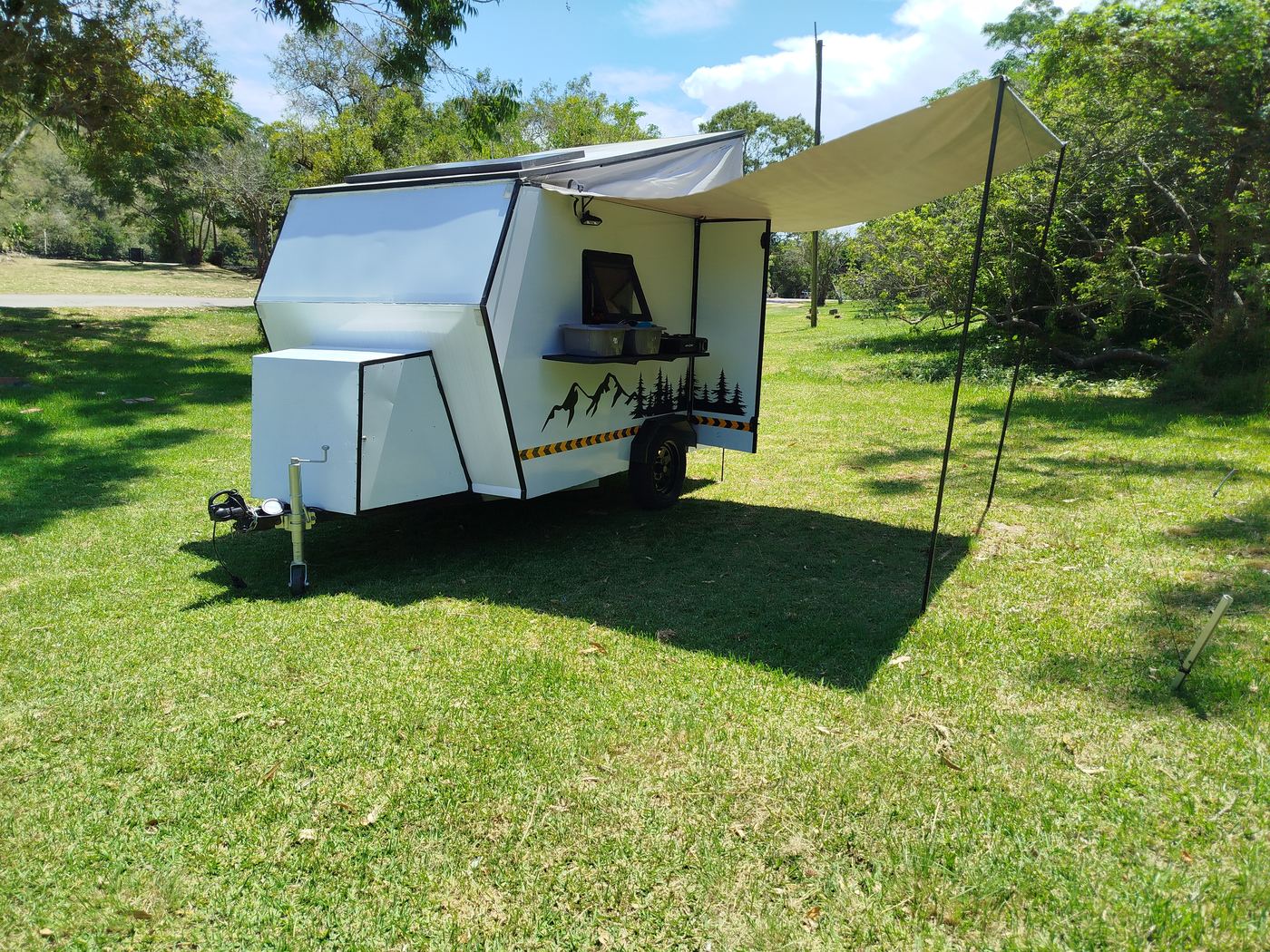
The old Kampi showed listings in the order they were created. Newest first. That meant a brand-new listing with no reviews and no photos could sit above a five-star camper with dozens of completed trips. That didn't make sense for renters, and it didn't reward the owners who put effort into their listings.
The new search works differently. Every listing now has a health score calculated from eight signals:
Scores update daily. When you search for a camper, results are sorted by quality, not by who listed most recently. The campers with the best track records show up first.
We also added proper filters. You can search by location on a map, set travel dates to only see available campers, and filter by price range, camper type, sleeping capacity, and driver's license type. That last one matters: if you only have a Code B license, you can filter to campers you're legally allowed to tow.
Previously, you had one option: pay the full amount upfront through PayFast. For a R6,000 booking, fine. For a two-week December holiday that runs into five figures, paying everything at once is a barrier.
Kampi now offers split payments. If your booking is R2,200 or more, you can spread the cost over up to four monthly installments. The first payment confirms your booking immediately, and the rest follows on a set schedule. Your final installment is always due at least two weeks before check-in, so there are no last-minute surprises for you or the owner.
We also added direct bank transfer as a payment option. If you prefer EFT over card payments, you can choose bank transfer at checkout. The system generates a unique payment reference, you transfer the amount, and the booking is confirmed once the payment clears. This works for both full payments and individual installments.
Two new options for owners who want more visibility:
Featured on the homepage (R250 for 28 days). Your camper appears in the Featured Campers section on the Kampi homepage. Eight slots available at any time, rotating on a first-come, first-served basis. If all slots are full, you join a queue and get activated as soon as one opens.
Search priority (R100 for 28 days). Your listing gets a sponsored badge and a boost to the top of search results. Up to three promoted listings appear at the top of page one, selected randomly from all active promotions in your province. Your camper gets extra visibility without dominating the results.
Both options are self-serve. Owners purchase promotions from their dashboard, track their status, and renew when they expire.
On a peer-to-peer platform, you're handing your camper to someone you've never met, or driving off with someone else's vehicle. Both sides need to know who they're dealing with.
The new Kampi requires email and phone verification for all users. Renters now submit driver information and KYC details before their first trip, including license number and ID verification. Owners upload vehicle documents (NATIS registration, license disk, proof of address, and ID) which go through admin review before being approved.
All documents are stored in private cloud storage. Not publicly accessible, only used for verification. We're handling sensitive personal information, and we treat it accordingly.
The old platform handled security adequately. The new one treats it as a first-class concern.
Your login session is now managed with HttpOnly cookies instead of browser storage. In practice, that means your authentication tokens can't be stolen by malicious scripts on the page. We've added CSRF protection on every action that changes data, rate limiting to block brute-force attacks (login attempts are capped at five per minute), and proper password hashing with bcrypt.
We also detect your real IP address correctly through Cloudflare's proxy layer, so rate limiting works as intended even behind CDN. Every admin action on the platform is logged in an audit trail.
The backend was rewritten in async Python using FastAPI. The old platform processed requests one at a time. The new one handles multiple requests concurrently. Database queries, payment processing, email sending, and file uploads all happen without making other users wait in line.
On the frontend, we moved to React 19 with client-side data caching. Pages load faster because the app remembers what you've already fetched and only refreshes stale data. Images are compressed on your device before upload, so listing photos go up faster and use less bandwidth.
Over 20 automated background tasks now handle booking reminders, payment deadline warnings, deposit processing, review requests, and daily database backups. Most of these used to be manual or didn't exist at all.
The result is a platform that handles traffic spikes (festival announcements, long weekend rushes) without slowing down. Search results come back faster, pages respond quicker, and the whole system is more resilient.
Owner payouts used to be a manual process that could take weeks. The new system creates payout records automatically the day after a guest checks in. Every payout shows the exact breakdown: rental amount, insurance, admin fee, and the owner's final cut.
Owners register their bank account once (FNB, ABSA, Nedbank, Standard Bank, Capitec, and others are all supported), and payouts are processed via batch EFT. Owners see their full payout history and summary from their dashboard, and the admin panel tracks pending, upcoming, and overdue payments at a glance.
If a payout is held for any reason (dispute, pending claim), it gets a clear hold reason and is released once resolved. Every change is logged.
The deposit system was rebuilt from scratch. Here's how it works now:
Deposits are collected seven days before check-in via PayFast. After the trip, owners have 72 hours to file a damage claim. Claims require evidence: photos, invoices, or quotes uploaded directly through the platform. The renter then has 72 hours to accept or dispute.
If disputed, Kampi's admin team reviews the evidence and makes a final call. The outcome can be a full refund to the renter, a partial refund, or full forfeiture of the deposit. Every step is tracked, and both parties can see where things stand at any point.
Owners can also request a 10-day hold on a deposit after checkout if they need time to assess damage before filing a claim. And if the claim amount exceeds the deposit, the excess is tracked separately.
For renters: your deposit is held by Kampi, not the owner. There's a structured process with evidence and review before any money moves. For owners: proper protection with a clear path to recover costs when damage happens.
If you've rented through Kampi before, the difference is immediate. Smarter search, more payment options, and a platform that's just faster across the board.
If this is your first time, you're starting with a platform that has 4,600+ completed trips, 365 campers from 245 verified hosts across South Africa, and a 4.88-star average from 600+ reviews.
Browse available campers and see what is out there.
More than 5,600 completed trips, 373 active campers and caravans, and a verified review average of 4.89 out of 5 across 782 ratings. Browse campers on Kampi.
Faster search, cleaner booking flow, new calendar hygiene, improved payout system for owners, and proper cross-border support. Full list on the post above.
Meaningfully faster. Page loads are typically 3 to 5x quicker than V1, and the mobile experience has been rebuilt from scratch.
No. Your V1 account and bookings were migrated across. Log in with the same email address.
Yes. All completed bookings, reviews, and active reservations were carried over during the migration.