Kampi now rents AlphaGO Cube inflatable air tents in Pretoria. 10.5m2 of space, up in four minutes, from R540 a day. Sleeps 2 or sleeps 4, min 3 nights.
Every camping trip has one moment that decides how the rest of it feels. You arrive later than you meant to. The light is going. Somebody needs the toilet, somebody else is hungry, and in the back of the bakkie there is a bag of aluminium poles that all look identical in the dark. Nobody is having fun yet. The fire is still an hour away.
That moment is the reason air tents exist.
Kampi started with caravans, added off-road trailers, then rooftop tents and motorhomes. Ground tents were never on the list, because a tent is the one thing most South Africans already own. Then we watched an inflatable tent go up in four minutes and changed our minds. There are now two Cube air tents listed on Kampi, both collected in Pretoria, and this is the honest guide to what they are and who they suit.
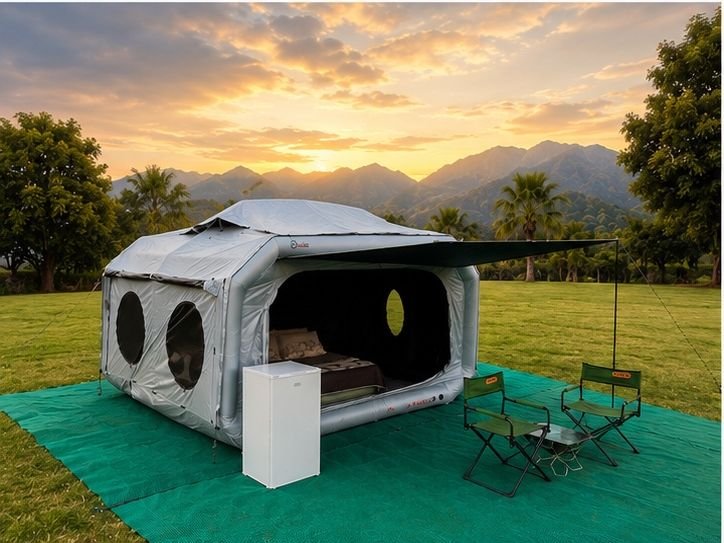
An air tent replaces the poles with sealed tubes. You unroll it, screw a pump onto one valve, and pressurise the frame to 5 PSI. The beams go rigid and the tent stands itself up. Nothing to thread, nothing to snap, nothing to lose in the grass.
The Cube comes from AlphaGO, sold out of a Cape Town head office, so the design assumptions are local rather than European. The beams are 0.3mm welded TPU, the same material used in packrafts and river rescue gear, wrapped in a 150D Oxford sleeve. That sleeve is the part that matters here. Thorns are why most people distrust inflatable anything, and a bare TPU beam in the bushveld would be a short story. The sleeve takes the thorn, the beam does not.
The numbers, from the manufacturer's own spec sheet:
Over 2m of standing height is the spec people underestimate. Most family dome tents give you about 1.8m at the very centre and less everywhere else, which means you get dressed sitting down. In the Cube you stand up, in the middle of the night, without swearing.
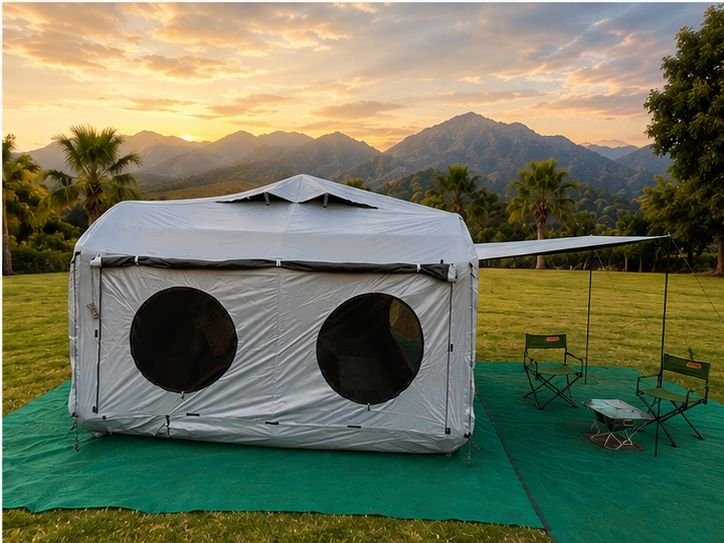
Both are listed by the same Pretoria host and both are request-to-book, so you send a request and the owner confirms rather than the booking going through instantly. If you have not booked that way before, our note on booking requests versus confirmed bookings explains the difference in two minutes.
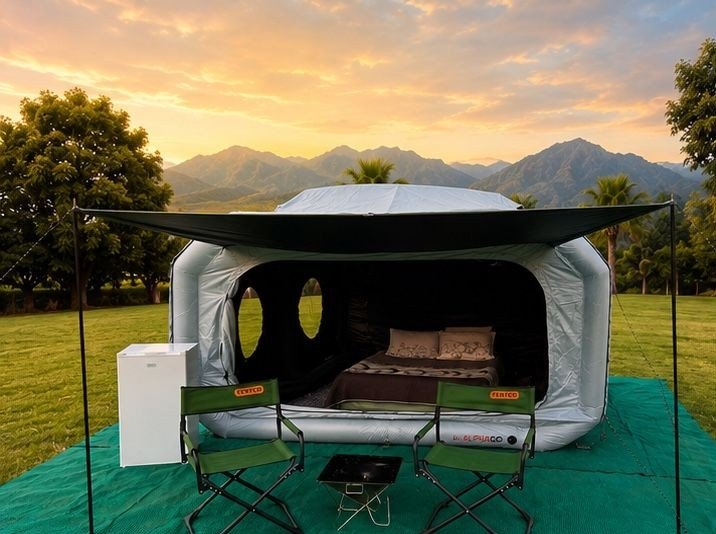
R540 a day, minimum three nights. The Explorer Pro is the version that ships with the extras, and the listing inventory shows the extended awning and two groundsheets included. Collection runs between 08:30 and 16:30, and the owner wants 48 hours notice. High season pricing lifts the base rate, so book December and Easter early.
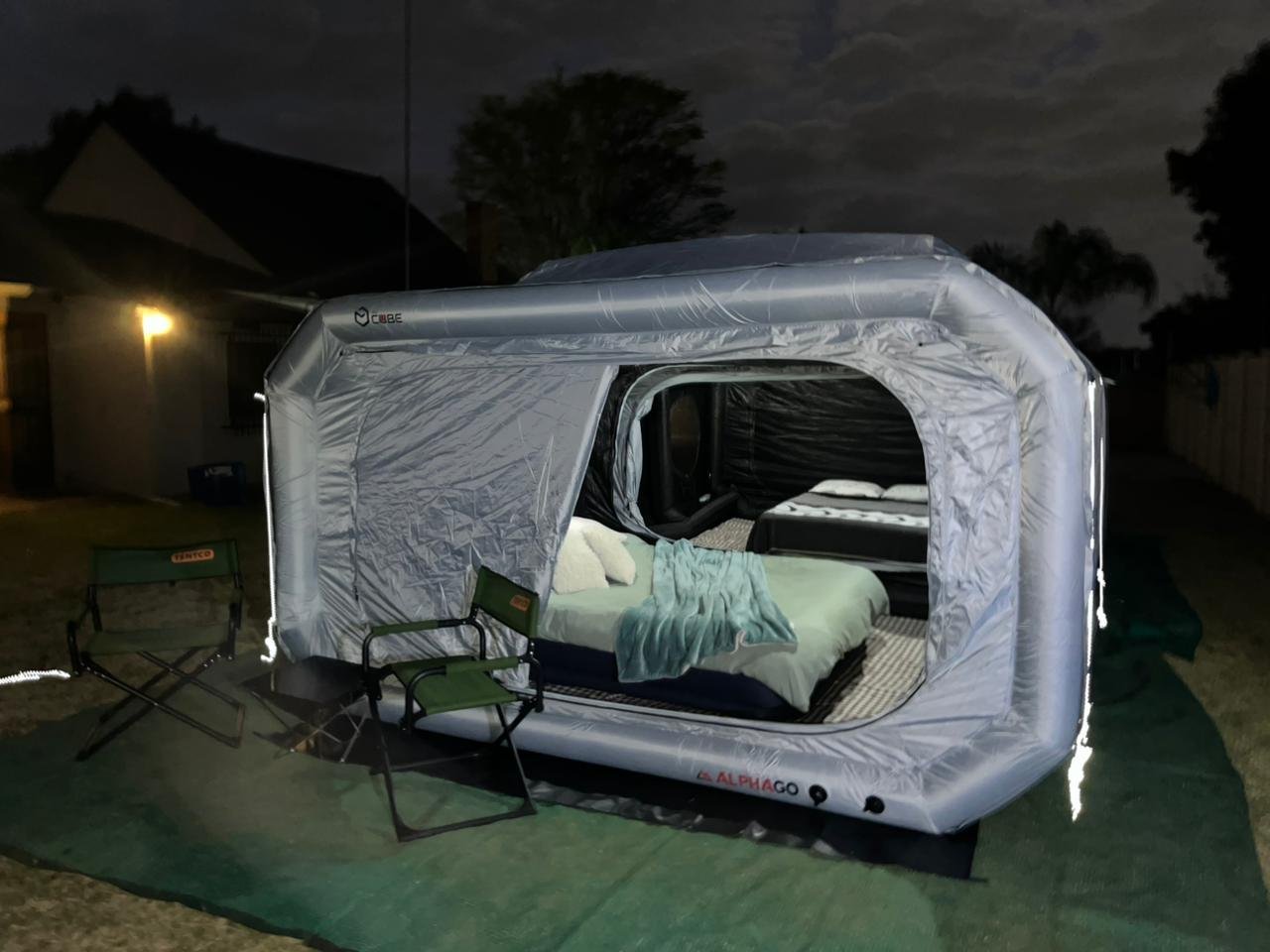
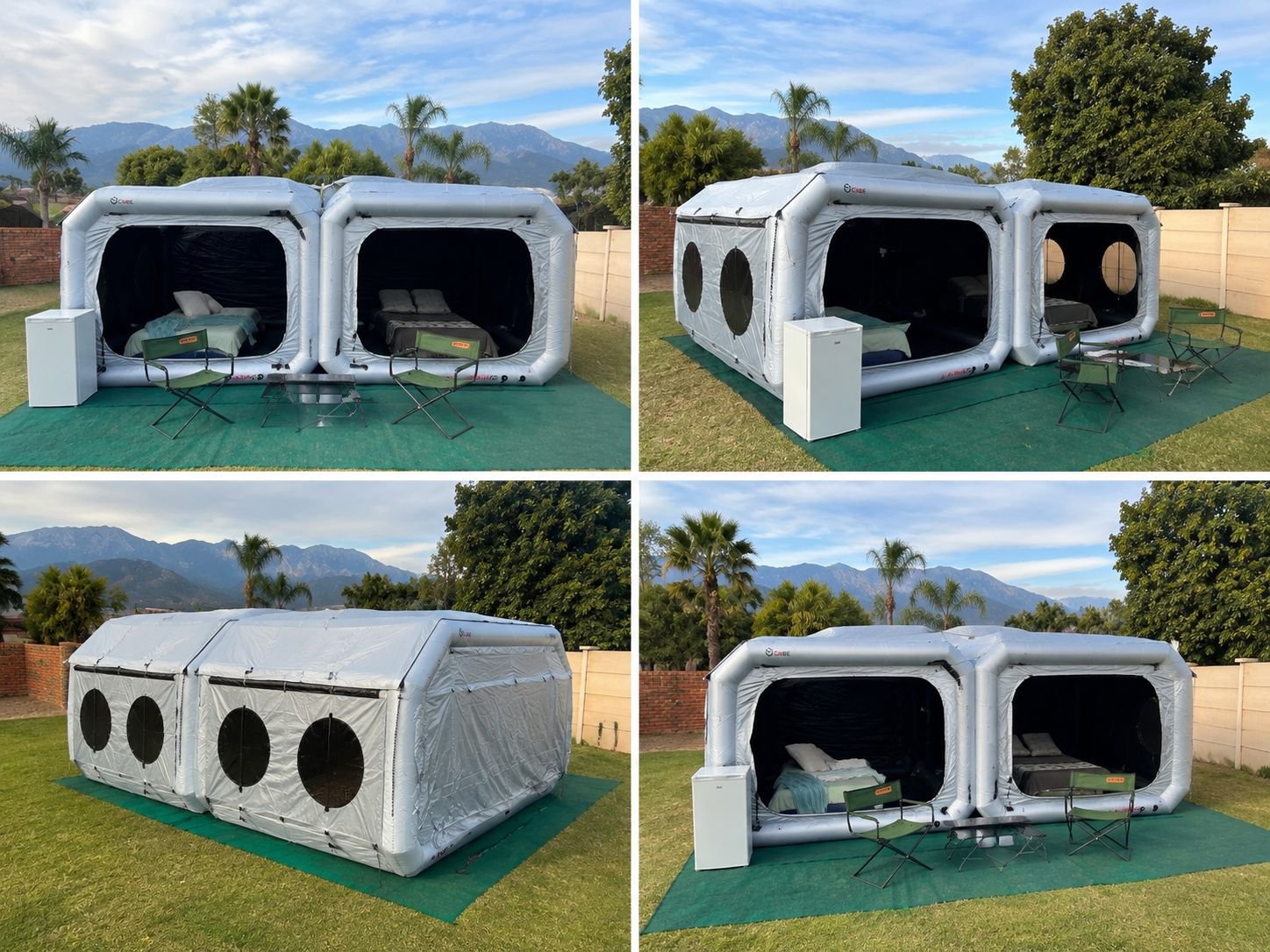
R866 a day, minimum three nights and a maximum of thirty. This is the two-room setup, two cubes joined into one shelter, so the second bed sits behind its own zip door instead of a metre from your face. Check-in is flexible, LED lighting and two groundsheets come with it, and weekly or monthly bookings get 5% off.
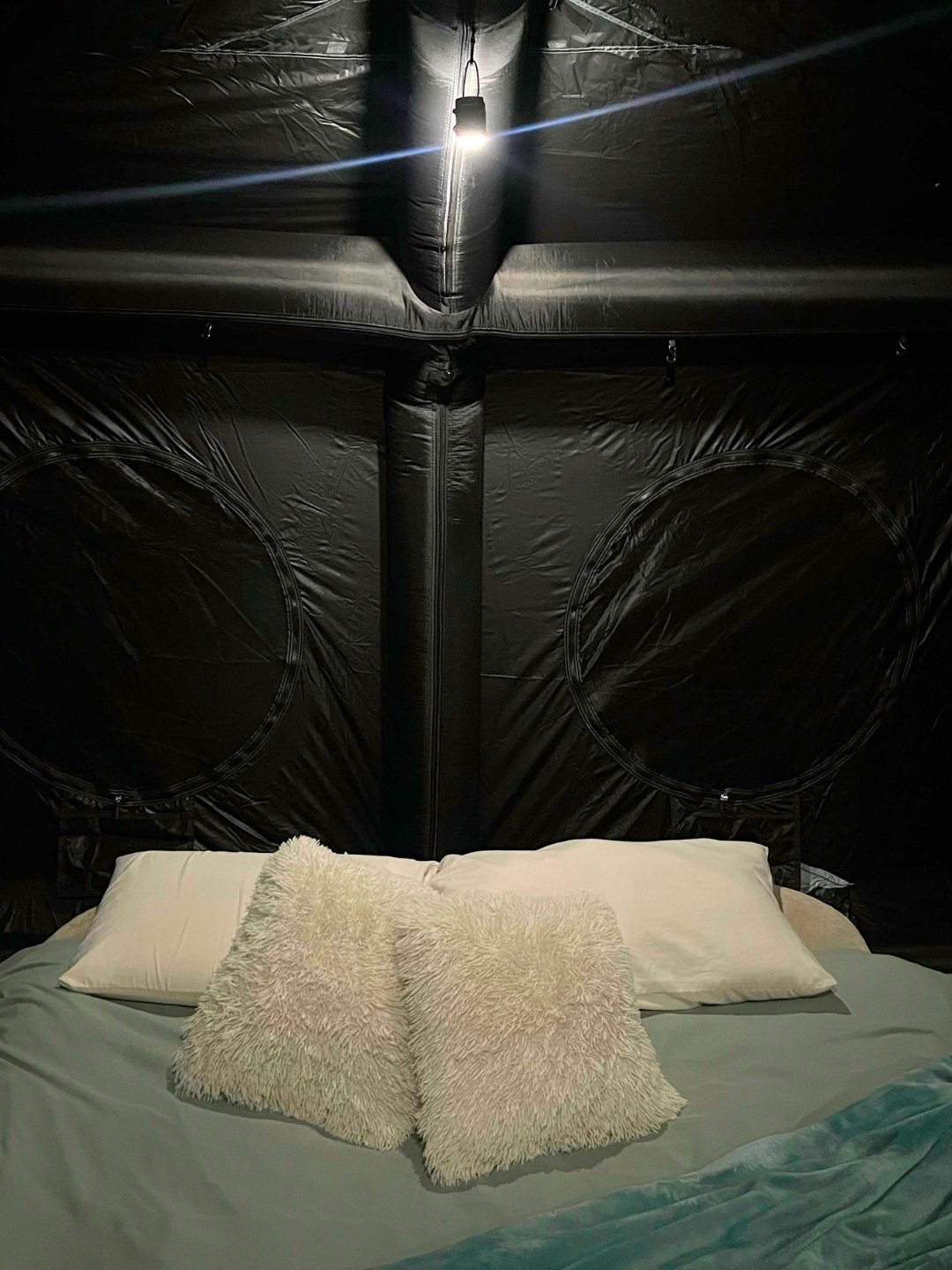
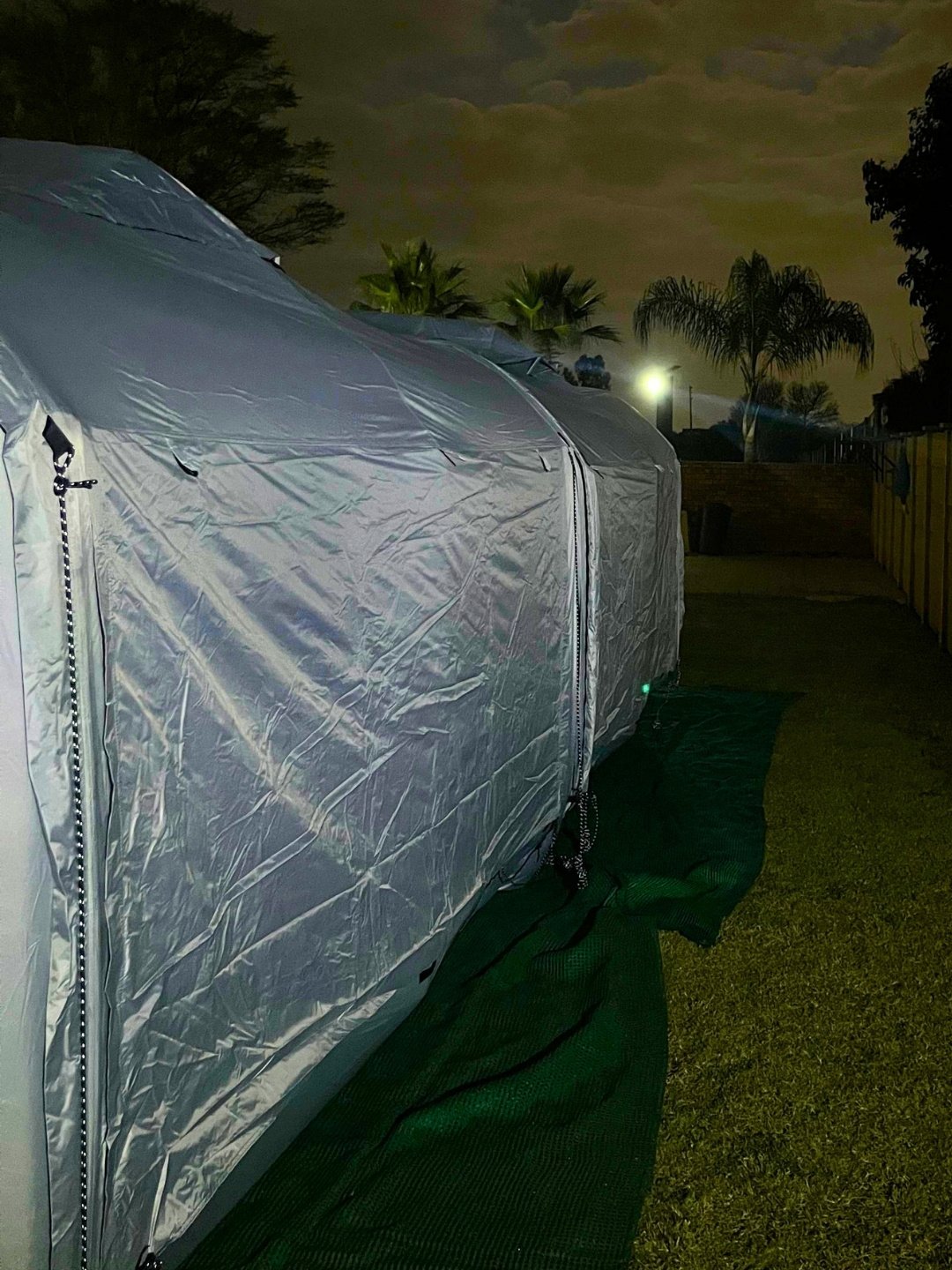
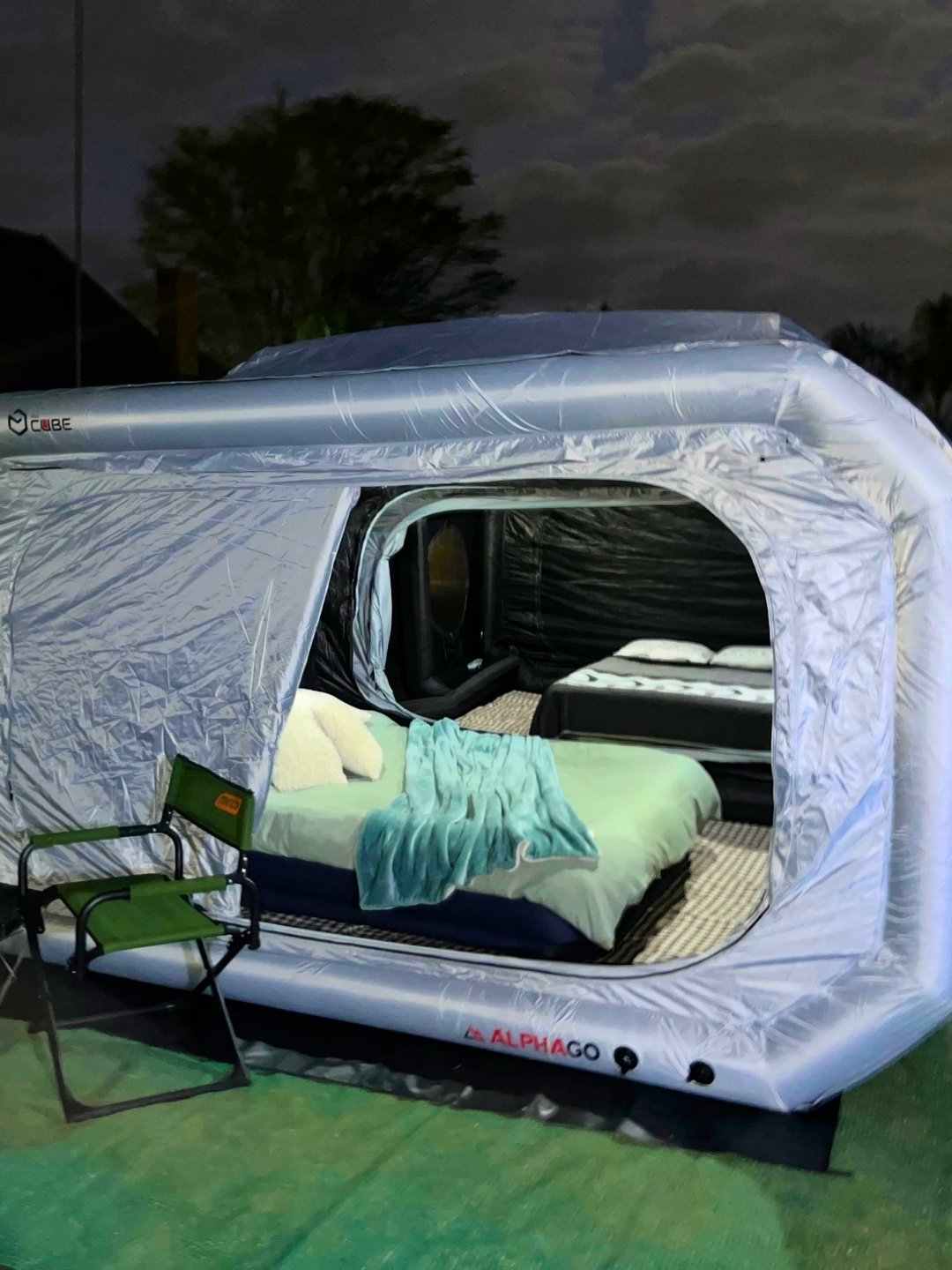
Look at the Starlight photos properly, because they were taken at night in a Pretoria back garden rather than in a studio. Below is what it looks like at 21:00 with the rope light on.
Both prices are what you pay per day, fees included. Kampi does not spring a service fee on you at checkout, which we wrote about in the price you see is the price you pay. A R250 cleaning fee applies per booking, and there is a R5,000 refundable breakage deposit on both.
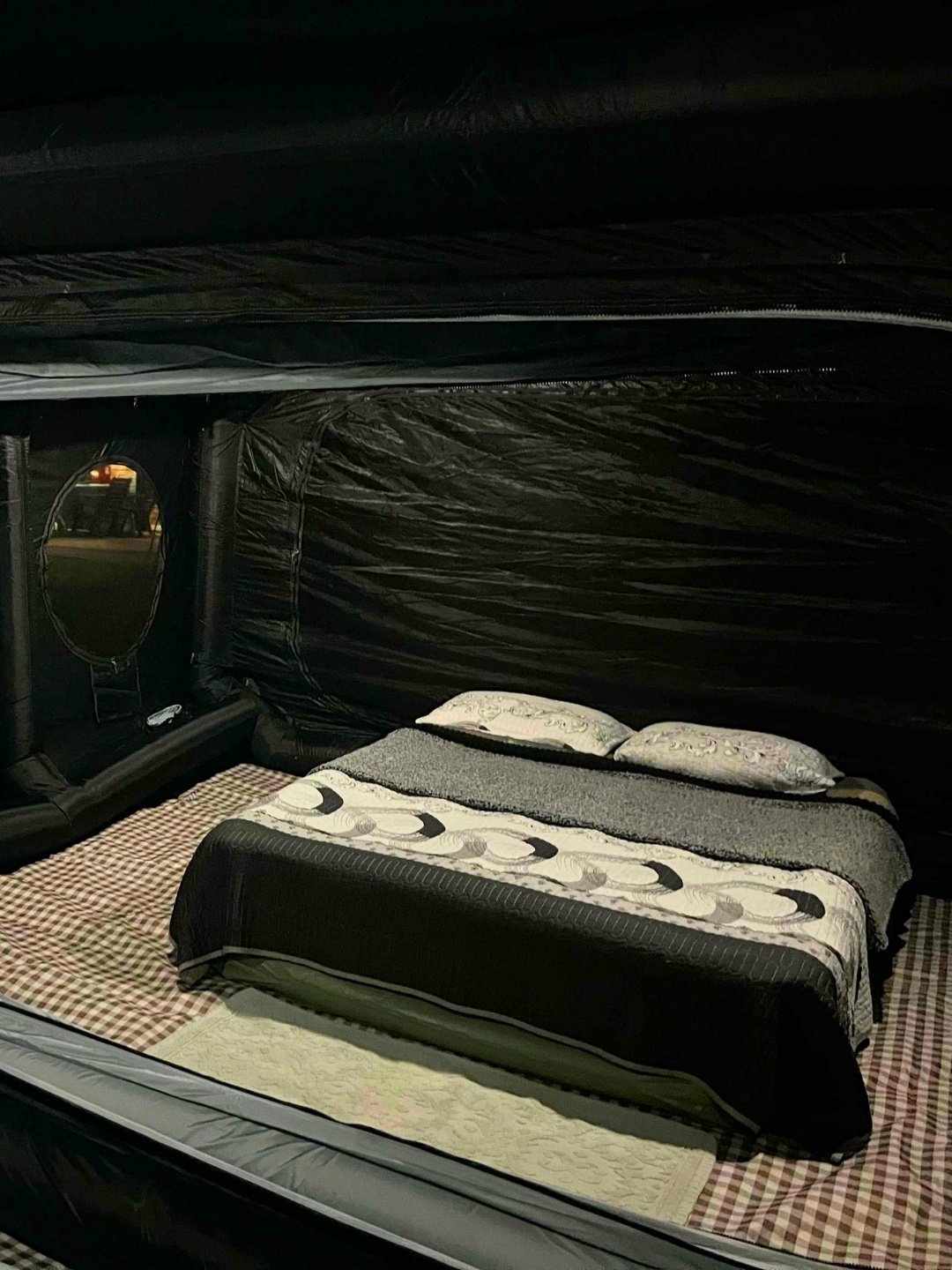
Ten and a half square metres is roughly a single garage. In the four-sleeper that means two proper beds with a walkway between them and space to leave bags standing rather than stacked. The interior is blacked out, which is the second thing people underestimate. A dark tent at 05:30 in December is the difference between a lie-in and a 04:45 wake-up call from the sun.
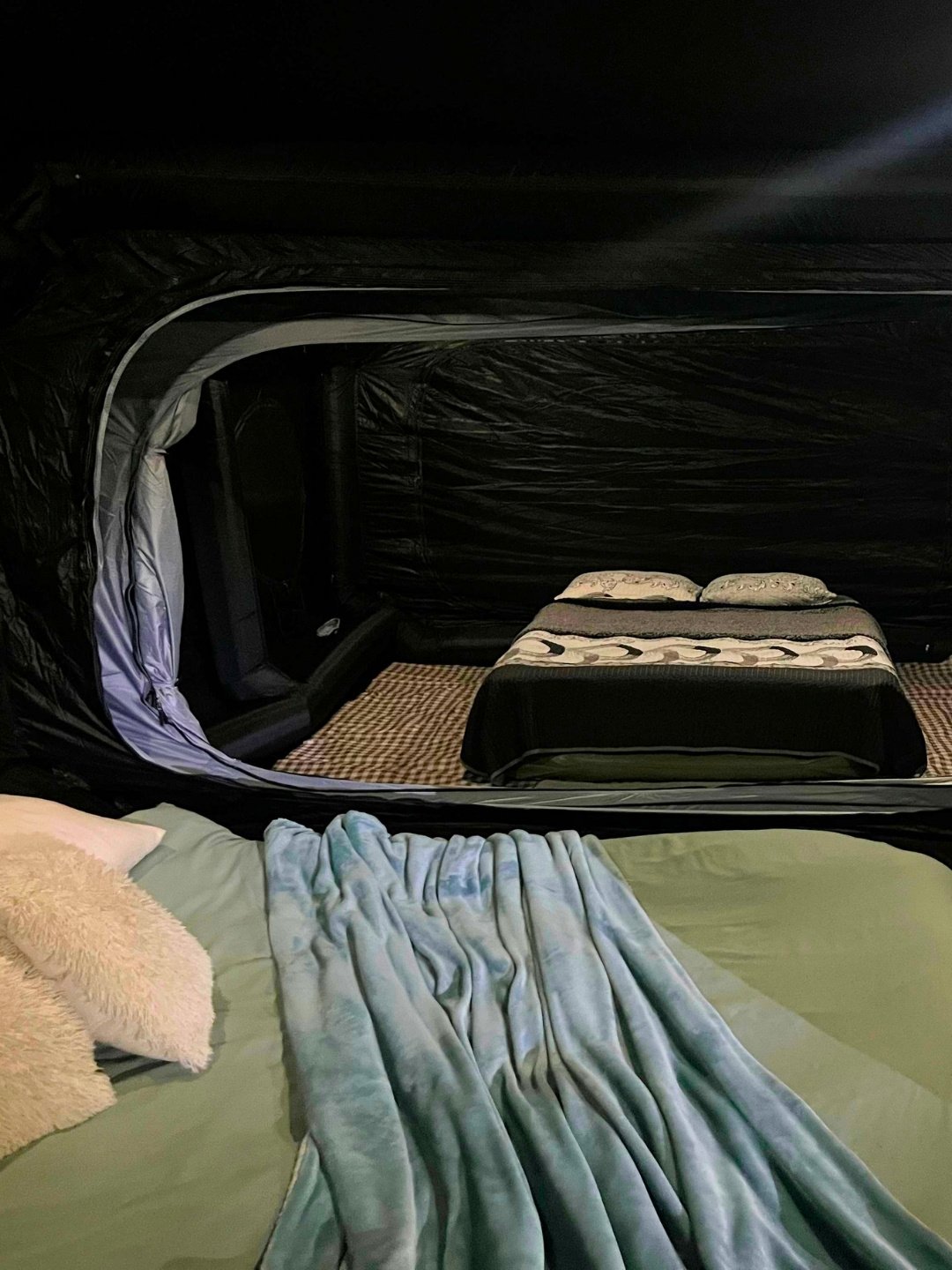
The round panels on the walls are vents and windows, with cross-ventilation front to back. There is also a pocket designed to take the hose of a portable air conditioner, and pass-throughs for fan or light cables. If you plan to run a fan or a fridge off a battery, our guide to solar, batteries and fridges covers what you actually need to bring.
These are the three things everybody asks, in the same order, every time.
A pressurised beam flexes and comes back. A fibreglass pole flexes and then snaps at the ferrule, usually at 02:00, usually in the rain. That is the real argument for air over poles, and it is why the beams are the expensive part of the tent. Anchoring still matters, though. Guy ropes out, pegs in properly, and on hard ground use screw anchors instead of hammering a bent peg into shale.
PU3000mm is a serious waterproof rating for a tent, and the 420D ripstop floor is heavier than what you get on a standard family dome. The Starlight photos show a rain sheet fitted over the top, which is the setup you want through Highveld thunderstorm season.
Covered above, but the part worth repeating is that the beams sit in separate chambers. A puncture in one beam does not drop the tent. You patch it with the repair kit that lives in the bag and carry on.
JP puts it like this:
Pole tents fail at the poles. An air tent fails at a beam, and a beam is something you can patch in the dark with a torch in your mouth. I would rather have that failure mode.
Two adults, the Explorer Pro at R540 is the obvious answer. Two adults and two kids, or two couples travelling together, take the Starlight. The second room stops being a luxury the moment one person goes to bed at 20:00 and another is still at the fire at 23:00.
Air tents win hardest at a base camp. Thirty kilograms and a four-minute pitch is brilliant when you set up once and stay four nights. It is less brilliant on a moving route with a new campsite every evening, because thirty kilograms is thirty kilograms whether you pitch it once or six times. For that kind of trip an off-road trailer or a rooftop tent is usually the better tool.
The Cube needs a flat 3.5m x 3m footprint plus room for the awning and guy ropes. Most established South African campsites are fine. Some of the tighter stands in the Kruger rest camps and the older Cape sites are not. Check the stand dimensions before you book, not after.
The Explorer Pro Edition retails on the manufacturer's site at R27,995, down from R35,000. At R540 a day on Kampi, you would need roughly 52 nights of camping before renting costs you more than buying. Very few families get anywhere near 52 nights.
That maths is the whole argument, and it is the same one we made about renting versus buying a caravan. Buying a R28,000 tent because you liked it at a show and then using it twice is how garages fill up in this country.
Rent it for three nights before you spend twenty-eight thousand rand on a guess. If you love it, you have spent R1,620 and bought certainty. If you hate it, you have just saved yourself twenty-six thousand.
Festivals are the clearest case in the country. You arrive at Aardklop or Rocking the Daisies on a Thursday afternoon into a field with two thousand other people, and your tent is up before your neighbour has found his mallet. Blacked-out walls also mean you sleep past 07:00 on the Saturday, which at a festival is worth more than the rental. Our 2026 festival calendar has the dates.
Base camps are the other one. Four nights at a single site in Dinokeng, the Waterberg or a Drakensberg resort is where 10.5m² pays for itself. Set up once, live in it, take it down once. The same goes for a KZN December, where standing height and cross-ventilation matter more than anywhere else in the country. Check the December holiday dates and book early, because the good sites go in September.
Then there is the group nobody builds for. A tent needs no tow bar, no EB licence, no reversing skills and no roadworthy certificate. If the reason you have never rented a caravan is that you drive a hatchback, this is the version of Kampi that finally works for you.
Send these in the booking request. Good owners like specific questions.
That last one is the question most people forget. A wet tent packed into a bag for three days is how a good tent turns into a mouldy one, and it is worth agreeing up front who dries it and who pays if it goes wrong.
Pitching an unfamiliar tent in the dark is still the fastest way to find out how a marriage is doing. Four minutes and one pump does not fix a marriage, but it does remove the argument. After 6,100 completed trips on Kampi we have learned that the ones people rebook are the ones where nothing went wrong in the first hour.
The tent is not really what you are renting. The thirty minutes after you arrive is what you are renting.
These are the first two ground tents on a platform of just over 400 campers, and they are genuinely an experiment. If you rent one, tell us what worked and what did not. That feedback decides whether we list twenty more.
Book the two-sleeper: AlphaGO Air Cube Tent Explorer Pro Edition, R540 a day.
Book the four-sleeper: Wander Cube Starlight, R866 a day.
Or browse everything else on Kampi, from teardrop campers to full off-road caravans. New to all of this? Start with first-time overlander or the camping hacks list.
Die kamp staan in vier minute. Alles reg.