Renting vs Buying a Caravan in South Africa - The Honest Numbers
A data-driven comparison of renting vs buying a caravan in South Africa. Real costs, break-even analysis, and when each option makes financial sense.
Renting vs Buying a Caravan in South Africa - The Honest Numbers
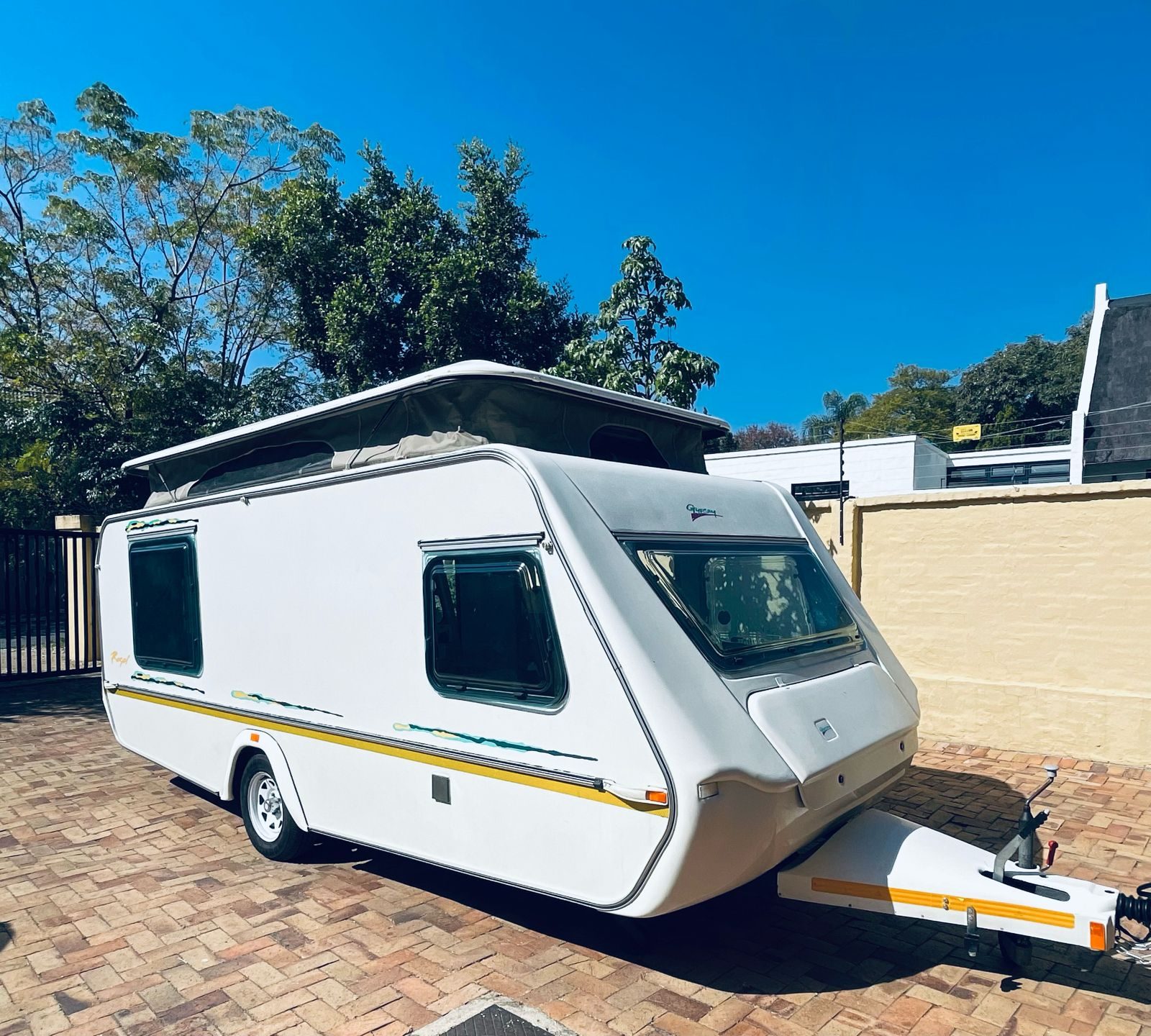
Should you buy a caravan or rent one? It depends on how often you camp, what you can afford, and what you actually want from the experience. This isn't a sales pitch - it's a calculator. We've done the maths with real South African numbers so you can make the call yourself.
The True Cost of Owning a Caravan
The sticker price is just the beginning. Here's what caravan ownership actually costs when you add up every line item most people forget about.
Purchase and Finance
A new mid-range caravan in South Africa - think Jurgens Penta, Sprite Swing, or Echo 4 - runs between R250,000 and R450,000. Decent second-hand options start around R150,000, but anything under R100,000 usually comes with expensive surprises.
Most buyers finance their purchase. At the current prime rate of 11.75%, a R300,000 caravan financed over 60 months means:
- Monthly repayment: ~R6,600
- Total interest paid: ~R96,000
- Total amount repaid: ~R396,000
That R300,000 caravan just became a R396,000 caravan - before you've towed it anywhere.
Ongoing Annual Costs
These are the costs that tick over whether you're camping or not:
- Insurance: R450,R750/month depending on value and cover (R6,000,R9,000/year)
- Storage: R500,R1,200/month if you don't have space at home (R6,000,R14,400/year)
- Annual service: R1,500,R3,500 for bearings, brakes, lights, gas check, and sealant
- Licence and registration: R400,R700/year
- Maintenance and repairs: Budget R2,000,R5,000/year for the unexpected - a cracked window, leaking roof seal, fridge element, or blown tyre
Depreciation - The Silent Killer
New caravans lose 15,25% of their value in the first two years and continue depreciating roughly 8,10% per year after that. A R300,000 caravan purchased new is worth approximately R200,000 after 5 years and R140,000 after 10 years.
Depreciation is money you spend without ever writing a cheque. On a R300,000 caravan, you're losing R16,000,R20,000 per year in value.
Total 5-Year and 10-Year Ownership Cost
Let's add it all up for a R300,000 financed caravan, assuming mid-range costs and that you have storage at home (no monthly storage fee):
- Finance cost (5 years): R396,000
- Insurance (5 years): R37,500
- Servicing (5 years): R12,500
- Licence (5 years): R2,750
- Maintenance (5 years): R17,500
- Depreciation (5 years): R100,000
- Total 5-year cost: R566,250
- Resale value after 5 years: R200,000
- Net cost after resale: R366,250
Over 10 years (loan paid off after year 5, ongoing costs continue):
- Net cost after resale: ~R490,000
If you're paying for storage, add R30,000,R72,000 over 5 years. That changes the picture significantly.
The Cost of Renting on Kampi
On Kampi, the average booking is R6,437 for a 5-day trip. That includes the rental fee, insurance (R89/day), and a Kampi service fee. You pay, you camp, you return it. No storage, no servicing, no depreciation eating your bank account while the caravan sits in the driveway.
What Renting Costs Over Time
Assuming an average of R6,500 per trip (rounded up for inflation over the years):
- 2 trips/year for 5 years: R65,000
- 3 trips/year for 5 years: R97,500
- 4 trips/year for 5 years: R130,000
- 2 trips/year for 10 years: R130,000
- 3 trips/year for 10 years: R195,000
- 4 trips/year for 10 years: R260,000
What Else You Get When You Rent
- Variety: Off-road trailer this weekend, luxury touring caravan next month, motorhome for December. Kampi has 360+ campers to choose from.
- No commitment: Life changes. Kids grow up. Budgets shift. Renting adapts with you.
- No tow vehicle requirement: Some Kampi listings are motorhomes or come with delivery - you don't always need a bakkie.
- Split payment: Kampi offers split payment on bookings, so you can spread the cost.
The Side-by-Side Comparison
Here's the honest comparison, assuming a R300,000 caravan (financed, no storage costs) vs renting on Kampi at R6,500/trip:
Over 5 Years
- Own (2 trips/year = 10 trips): Net cost R366,250 - that's R36,625 per trip
- Rent (2 trips/year = 10 trips): R65,000 - that's R6,500 per trip
- Own (4 trips/year = 20 trips): Net cost R366,250 - that's R18,313 per trip
- Rent (4 trips/year = 20 trips): R130,000 - that's R6,500 per trip
Over 10 Years
- Own (2 trips/year = 20 trips): Net cost R490,000 - that's R24,500 per trip
- Rent (2 trips/year = 20 trips): R130,000 - that's R6,500 per trip
- Own (4 trips/year = 40 trips): Net cost R490,000 - that's R12,250 per trip
- Rent (4 trips/year = 40 trips): R260,000 - that's R6,500 per trip
The Break-Even Point - How Often Must You Camp?
This is the question that matters most. At what point does owning become cheaper than renting?
Using our 10-year net ownership cost of R490,000 and a rental cost of R6,500 per trip:
- Break-even: R490,000 / R6,500 = 75 trips over 10 years
- That's 7,8 trips per year, every year, for a decade
Be honest with yourself: are you taking 7+ camping trips a year? Most South African families manage 2,3. Even keen campers rarely hit 5 consistently once work, school terms, and life get in the way.
If you camp fewer than 7 times a year, renting is almost certainly cheaper. The maths don't lie.
If you buy a cheaper caravan - say R150,000 second-hand, paid cash - the break-even drops to roughly 4,5 trips per year. That's achievable for dedicated camping families. But you're also accepting older equipment, higher maintenance costs, and the risk of buying someone else's problems.
When Buying a Caravan Makes Sense
We promised honest numbers, not a one-sided argument. Buying genuinely makes sense if:
- You camp 6+ times per year and have done so consistently for at least 2,3 years (not just one enthusiastic season)
- You have storage at home - cutting R6,000,R14,000/year in storage fees makes a real difference
- You can buy cash or with a small loan - finance charges at 11.75% add roughly R100,000 on a R300,000 purchase
- You know exactly what you want - you've camped in different setups and know a specific layout suits your family
- You want to list it on Kampi when you're not using it - offset your ownership costs by earning rental income. Many owners cover insurance, storage, and servicing this way
- It's a lifestyle choice, not just a financial one - some people love the ritual of owning, customising, and maintaining their rig. That has real value even if the spreadsheet doesn't show it
When Renting is the Clear Winner
Renting makes more financial sense if:
- You camp 1,4 times per year - the vast majority of South African families
- You're still figuring out what type of camper you like - a rooftop tent, off-road trailer, and touring caravan are completely different experiences
- You don't have a tow vehicle - buying a caravan often triggers buying a bigger bakkie too, and suddenly you're R800,000 deep
- Your kids are young - family needs change fast. What works for a toddler doesn't work for a teenager
- You'd rather spend capital elsewhere - R300,000 in a tax-free savings account at 10% beats a depreciating caravan every time
- You're a first-timer - spending R300,000 on something you've never actually done is a bold move
The Smart Move - Rent First, Then Decide
Even if you're leaning towards buying, renting a few different campers first is the most financially intelligent move you can make. Here's why:
- Try different types: Rent an off-road trailer for a Baviaanskloof trip, a touring caravan for a Drakensberg holiday, and a motorhome for the coast. You'll learn more in three weekends than months of YouTube research.
- Test your commitment: Do you actually enjoy the setup, the packing, the towing? Or do you love the idea of camping more than the reality? Better to find out at R6,500 than R300,000.
- Learn what features matter: Hot water system or solar shower? Full bathroom or just a toilet? Air conditioning or canvas windows? You won't know until you've lived in it.
On Kampi, you can rent from 360+ campers across South Africa - from basic rooftop tents to fully kitted luxury caravans. Every rental teaches you something about what you actually want.
The Bottom Line
Buying a caravan is an emotional decision dressed up as a practical one. That's not a criticism - some of the best things in life aren't strictly rational. But if the numbers matter to you (and they should), here they are:
- Fewer than 5 trips/year: Renting saves you R200,000+ over a decade
- 5,7 trips/year: It's close - consider buying cash or second-hand
- 8+ trips/year: Buying starts to make sense, especially if you have home storage
Whatever you decide, the worst financial move is buying a caravan that sits in storage 350 days a year. And the best way to avoid that? Start by renting.
Related reading
Browse 360+ campers on Kampi and find your next adventure - no R300,000 commitment required.
More than 5,600 completed trips, 373 active campers and caravans, and a verified review average of 4.89 out of 5 across 782 ratings. Browse campers on Kampi.
Frequently asked questions
Is renting a caravan cheaper than buying?
For fewer than 30 rental days a year, yes. Owning only starts to make sense around 40+ annual usage nights, once insurance, storage, and depreciation are factored in.
What is the break-even point between renting and buying?
Typically around 40 to 60 nights a year, depending on the caravan purchase price and whether you list it on Kampi when you are not using it.
How much does caravan insurance cost annually?
Expect R4,000 to R12,000 a year for comprehensive cover, depending on value and storage location.
What hidden costs come with owning a caravan?
Storage fees, tyre replacement every 5 to 7 years, gas recertification, licence renewal, service, and depreciation of around 8 to 12 percent per year.
More articles on Kampi