Give the handover an hour, photograph everything, hitch up from a checklist and stop after 20 km. What to ask the owner when you collect a rental caravan.
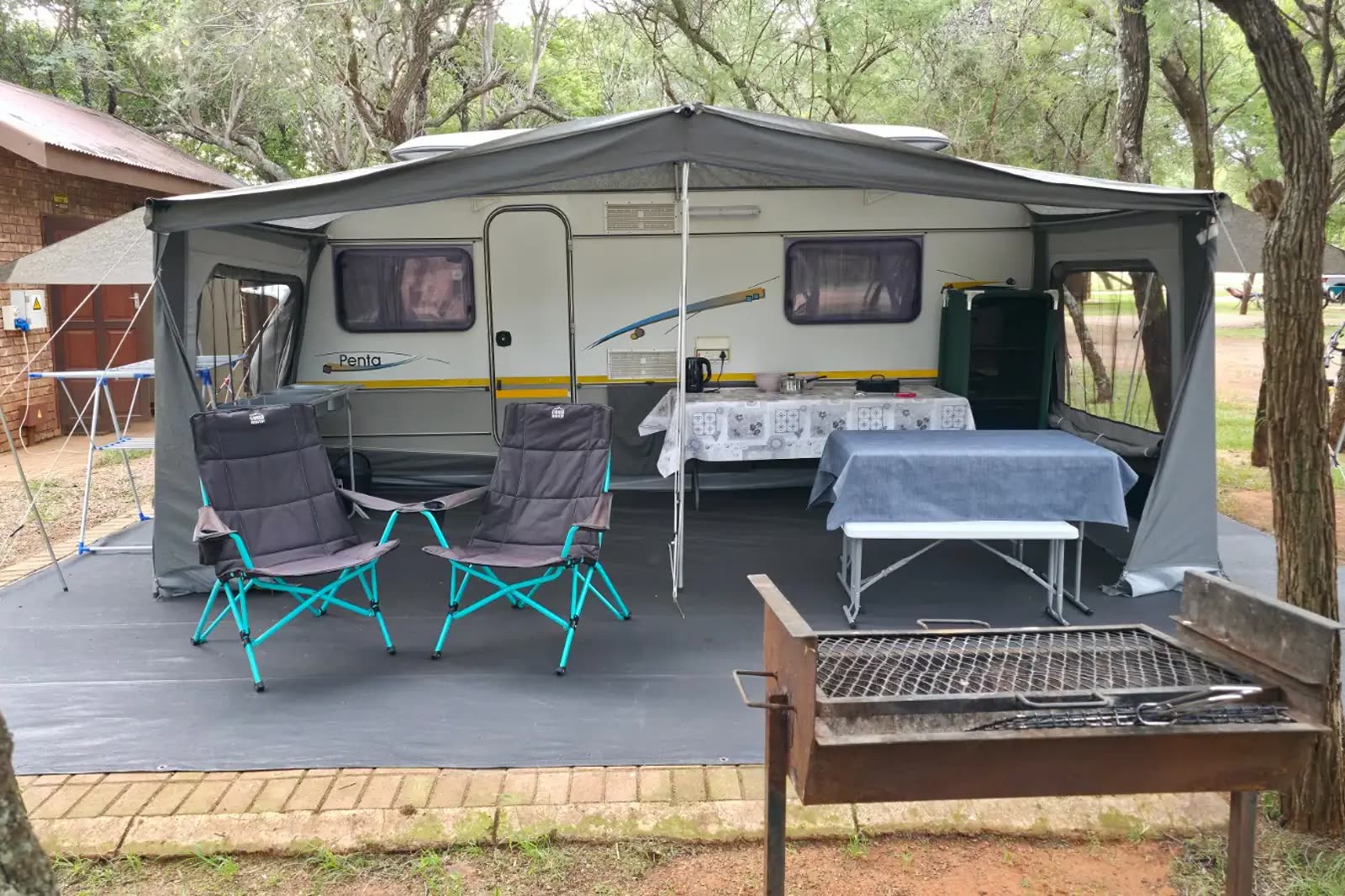
It is Friday, half past three. You left work early, the kids are in the back with the cooler box, and you have told everyone you will be at the campsite by dark. The owner meets you in the driveway, shakes your hand and starts talking about the gas, the awning, the water pump and the reverse lock, all at once, while you nod and think about the N1.
This is the afternoon most caravan trips go wrong, and it is not on the road. It is in the driveway, in the fifteen minutes you tried to save.
This is post three in our weekly series built on Kampi Guides, the free library we wrote for people renting a caravan for the first time. So far we have covered what you may tow on your licence and towing for the first time. This week sits between the two: collecting your caravan, from the handshake to the first 20 km. The Afrikaans edition is Jou karavaan afhaal.
Give the handover a full hour. Walk round the caravan with the owner and photograph it. Read the licence disc and ask for the gas certificate. Hitch up from a checklist, not from memory, and test the lights with someone standing behind. Then drive 20 km, pull over and put your hand on every wheel nut and every hub.
"Nobody has ever regretted the extra half hour in the owner's driveway," says JP Voogt, Kampi's founder. "Plenty of people have regretted the half hour they saved, usually somewhere past Warmbaths with the hazards on."
Your driving licence, your vehicle's licence disc and the booking confirmation. Code B covers a caravan with a GVM up to 750 kg; heavier than that needs Code EB. If you have not checked the numbers yet, go back to what can I tow before you leave home.
Crossing a border? Add the owner's authorisation letter, witnessed by a Commissioner of Oaths, with both ID numbers, both registrations, the countries and the exact dates on it. Our cross-border camping guide has the rest.
Photograph every panel, every window, the inside of every locker, and the chairs. When the owner demonstrates the tent, gas, water and electrics, take a video. You think you will remember the order of the switches. At the campsite, in the dark, you will not.
Questions to ask the owner while you walk:
Look at the tyres while you are there. The legal floor is 1 mm of tread, and a tyre is also illegal once its tread sits level with the wear indicator bars, about 1.6 mm on a modern tyre. That applies to the caravan's tyres exactly as it does to your car's. Both red rear triangles must be there, clean, and not hidden behind a bike rack.
Ask the owner to talk you through it once. Then do it yourself while they watch. The guide breaks it into six steps:
Then the small things: caravan handbrake fully off, all four corner steadies up, chocks stowed, gas valve closed and every appliance off.
The breakaway cable deserves its own paragraph. It is the emergency brake that pulls the caravan's handbrake on if the coupling ever parts company with the ball. Loop it over the ball or wrap it around the jockey wheel and you have switched it off. Too short and it yanks the handbrake on in a tight corner. Ask the owner where it clips on their car and copy that.
"The breakaway cable and the plug are what people forget," says JP. "The jockey wheel left down is the one they find out about on the N1, because everyone else on the N1 finds out about it too."
South African caravans use one of two plugs. The round 7-pin does the lights. The 13-pin adds a reverse light and a permanent 12 V feed for the fridge and battery. One will not go into the other, so ask before collection day which one the caravan has and sort out an adaptor if you need one. After the light test, check the fridge is actually charging off the car.
Regulation 204 of the National Road Traffic Regulations does not say "towing mirrors". It sets a test: can you see the traffic behind you? With a caravan on the back, your interior mirror shows caravan wall, so extension mirrors are the practical way to pass. Fit and adjust them on the driveway, not at the first robot.
Heavy things go low and over the axle. Light things go up high. Weight behind the axle is the classic cause of sway, so when in doubt, move it forward.
Nose weight, the downward push on the tow ball, must sit between 25 kg and 100 kg on a loaded South African caravan. You can check it with a bathroom scale and a short plank under the coupling, with the caravan chocked on level ground. It is rough, but it tells you whether you are in the band or nowhere near it.
Tyre pressures come off the caravan's own plate or handbook, set cold, spare included. Not your bakkie's placard. And the gas stays off: SANS 10087-2 says every appliance off and the cylinder valve closed while the caravan is moving. A three-way fridge runs on 12 V on the road, never on gas.
Drive gently. After about 20 km, pull off somewhere flat and safe, hazards on, and walk round the whole outfit:
If a wheel has been off recently, AL-KO says recheck the wheel bolt torque after 50 km, so do the nuts again at the first fuel stop. Grinding, grease on a rim or a burning smell means stop now.
A tow ball the wrong size, a plug that will not go in, an expired licence disc, a breakaway cable with nowhere to clip, or a caravan heavier than your car may tow: any one of those means you stay on the driveway. Phone the owner first; most of these have a simple answer. If it cannot be sorted there and then, Kampi is the next call.
Two days before check-in, Kampi sends you and the owner a digital handover form: licence verification, photos inside and out, existing damage and an equipment inventory. You both sign it off, and the same form runs in reverse when you bring the caravan back. That form, and your own photos, are why the return conversation is short.
Kampi holds the deposit, never the owner, and it comes back automatically if no damage claim is filed within 72 hours of the return. For what happens before either of you is allowed near the other's property, read what happens before a stranger gets the keys. Roadside assistance is part of every booking; the numbers are on the roadside assistance page.
The renter's first hour with your caravan decides how the next week goes. Demonstrate the awning, the gas and the reverse lock, then watch them hitch up once. It is the cheapest insurance you will ever buy. The owner-side list lives in the Kampi Care checklist, and the library's maintenance checklist for owners who rent out covers the walk-around you should do the day before.
Next week: how to reverse a caravan without an audience. The full library is already up:
Print the one-page towing checklist and keep it in the door pocket. Then find a caravan near you, and book the handover for early afternoon, not five o'clock.
Kampi Guides are general information, not legal advice. Check the regulations and your own vehicle's plate before you tow.