The Complete 4x4 Camper Trip Checklist: Vehicle, Trailer, Recovery Gear, and Safety
Everything you need to check and pack for a 4x4 camper trip. Vehicle prep, trailer checks, recovery gear, spare parts, safety equipment, and documents.
Before you leave: vehicle preparation
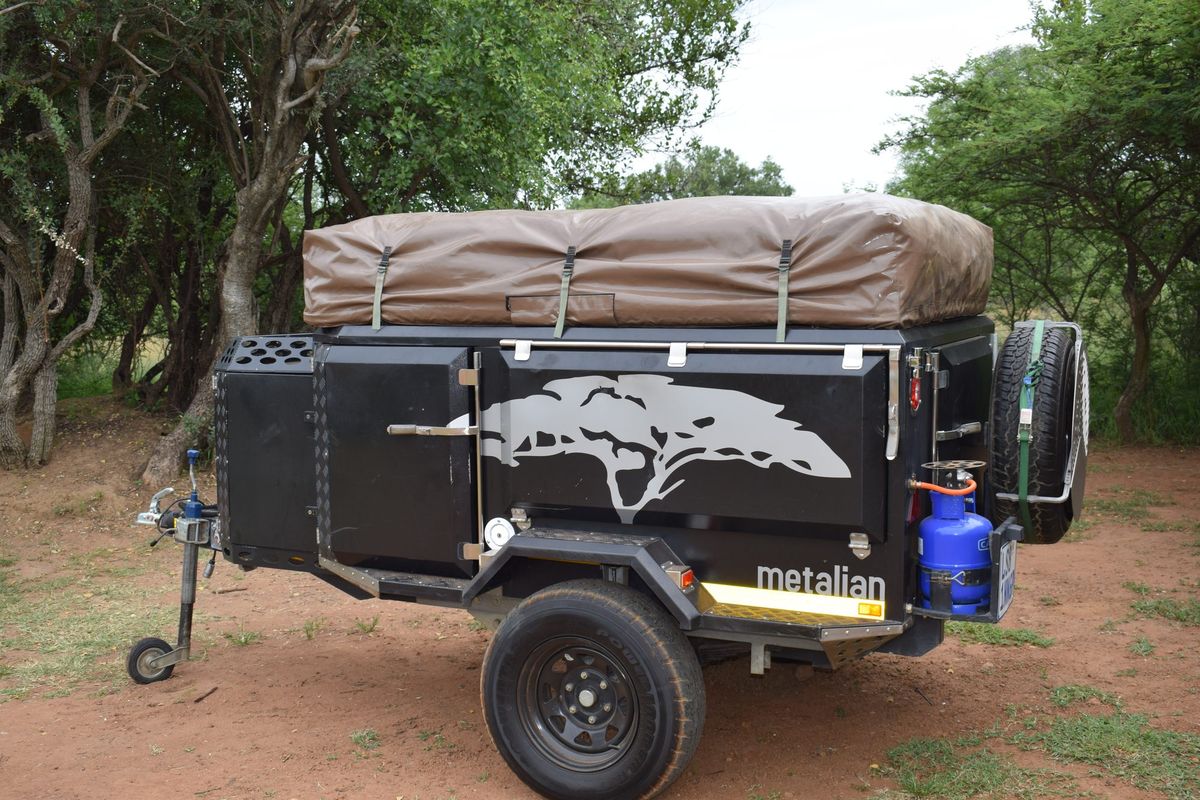
The worst place to discover a worn brake pad or a leaking radiator hose is 200 km from the nearest town. Whether you own your 4x4 or you're renting a camper trailer from Kampi, skipping the vehicle prep is how trips go wrong.
Get your vehicle serviced at least 2-3 weeks before departure. That gives time for any parts that need ordering. If you're within 1,000 km of your next service interval, do it early rather than risk it on the trail.
Engine and drivetrain
- Engine oil and filter - fresh oil before any long trip, especially if towing
- Coolant level and condition - use premixed coolant compatible with your vehicle
- Transmission fluid and transfer case oil
- Differential oil (front and rear) - check for leaks at the diff seals
- Power steering fluid
- Brake fluid level and condition
- Fan belts and tensioners - look for cracks, glazing, or fraying
- Radiator hoses (top and bottom) - squeeze them. Soft or swollen? Replace them
- Air filter - clean or replace. Dusty conditions clog a dirty filter in hours
- Fuel filter - carry a spare too. Bad fuel is common in rural areas and diesel engines hate it
Tyres and wheels
- Check tread depth on all tyres including the spare
- Inspect sidewalls for cuts, bulges, or cracks
- Check and tighten wheel nuts to torque spec
- Spare tyre inflated and matching the size/rating of your road tyres
- For remote trips, carry two full-size spares
- Tyre repair kit with plugs and cement - a plug can get you to the next town
- Portable air compressor (battery-connected, not cigarette lighter) with an accurate gauge. ARB compressors go up to 100 PSI and come with a carry case
- Tyre deflator for sand driving - drop to 1.2-1.6 bar for deep sand, re-inflate on tar
Lights and electrics
- All headlights, tail lights, brake lights, indicators, and fog lights working
- Trailer plug wiring - test with the trailer connected before the trip
- Battery condition and terminals - clean and tight
- Alternator charging correctly
- Carry spare bulbs and a set of fuses for your vehicle
Suspension and steering
- Check shock absorbers for leaks
- Inspect leaf springs or coil springs for cracks
- Wheel bearings - listen for rumbling, feel for play when you grab the tyre top and bottom
- Steering components - check for excessive play or worn bushings
- U-joints and CV joints - look for torn boots or clicking on turns
Camper trailer pre-trip checks
If you're renting a camper through Kampi, the owner should hand it over in working order. Still check these items at handover - it takes 15 minutes and saves arguments later. If you own the trailer, this is your pre-trip routine.
Hitch, coupling, and safety
- Tow coupling engages fully and the locking mechanism works
- Safety chain - in South Africa, a chain must connect the trailer hitch to the tow vehicle. This is law. Unlike some countries that use breakaway cables, SA requires a chain
- Jockey wheel operates smoothly and locks in the up position
- Handbrake holds the trailer on a slope
Wheels, bearings, and brakes
- Trailer tyre condition and pressure
- Wheel bearings - check for play, and feel for heat after a test tow
- Brake adjustment (if equipped with override or electric brakes)
- Spare wheel for the trailer, inflated and accessible
Lights
- All trailer lights working: tail, brake, indicators, number plate, and reflectors
- Check the plug connection - wiggle it while someone watches the lights
- For cross-border travel: white T-sign on front right, red T-sign on rear right. Blue and yellow warning triangles on tow vehicle bumper and trailer rear
Water, gas, and 12V systems
- Fill the water tank and check for leaks at all connections
- Test the 12V water pump - confirm it primes and the taps flow
- Check gas bottle connections for leaks (soapy water on the joints works)
- Test the gas stove, geyser, and fridge on gas
- Leisure battery charged - check with a multimeter (12.6V+ is full, below 12.0V needs charging)
- Solar panel clean and connected (if fitted)
- Fridge runs on 12V while towing and gas at camp
Weight distribution
- Nose weight should be about 10% of the trailer's total loaded weight
- Heavy items low and over the axle, not at the rear
- Overloading the back causes trailer sway at speed - dangerous on gravel
Recovery gear
If you go off-road, you will get stuck at some point. The right recovery gear means a 20-minute self-recovery instead of a day-long wait for a tow truck that might not come at all.
What you need
- Kinetic recovery rope (not a tow strap) - rated for at least your vehicle's GVM. A kinetic rope stretches under load and uses that energy to pull you out. 9,000 kg rating minimum for most 4x4s
- Rated bow shackles (x2 minimum) - 4.75 ton rated. Never use hardware store shackles for recovery
- Tree trunk protector - a wide strap that wraps around a tree without cutting into the bark. 5-metre length is standard
- Traction boards (Maxtrax or similar) - place under the wheels in sand or mud for self-recovery without another vehicle
- Hi-lift jack (or exhaust jack for sand) - a standard vehicle jack sinks into soft ground. A hi-lift lets you lift the vehicle and pack sand or boards under the wheels
- Recovery damper/blanket - drape over the rope during a snatch recovery. If something breaks, the blanket absorbs the energy instead of a shackle going through a windscreen
- Rated recovery points front and rear - factory tow hooks are not designed for snatch recoveries
Tool kit
- Full socket set (metric or imperial depending on vehicle)
- Combination spanners
- Screwdriver set (flat and Phillips)
- Pliers, multigrips, and side cutters
- Adjustable wrench
- Cable ties (assorted sizes) - fixes half of everything in the bush
- Duct tape and electrical tape
- Wire (binding wire and electrical wire)
- Hammer
- Wheel spanner and breaker bar
- Torque wrench (for wheel nuts)
Spare parts to carry
What you carry depends on how remote you're going and how old your vehicle is. A weekend at a Kruger campsite? The basics are enough. Botswana's CKGR or Namibia's Skeleton Coast? Carry the lot.
Always carry
- Engine oil (1-2 litres of the correct grade)
- Coolant (premixed, 2 litres minimum)
- Brake fluid (sealed bottle)
- Fuel filter - especially for diesel vehicles in areas with dodgy fuel
- Fan belt(s) for your specific vehicle
- Radiator hose (top and bottom)
- Assorted fuses (check your vehicle's fuse rating)
- Spare bulbs (headlight, tail, indicator)
- Hose clamps (assorted sizes)
- Silicone sealant / gasket maker
For remote travel (cross-border, multi-day bush trips)
- Wheel bearing kit (inner and outer, both sides)
- Bearing grease
- U-joint or CV joint for the driveshaft
- Diff oil (500ml)
- Power steering fluid
- Serpentine belt
- Clutch slave cylinder (if manual)
- Spare set of brake pads
- Radiator stop-leak (temporary fix only)
Safety equipment
Legal requirements (South Africa)
- Warning triangles - at least one reflective triangle. Place it 45 metres behind your vehicle when stopped on the road. For cross-border: carry blue and yellow warning triangles too
- Fire extinguisher - 1 kg DCP minimum, accessible (not buried under your camping gear)
First aid
- A proper first aid kit - not the R50 petrol station one. Include wound dressings, compression bandages, burn gel, paracetamol, antihistamine, scissors, gloves
- Snake bite kit - the ASI (African Snakebite Institute) Full First Aid kit is the one to get. It includes a resuscitator, pocket resus mask, smart pressure bandages for Black Mamba and Cape Cobra bites, a roll-up splint, sodium chloride for eye venom, and an emergency blanket. No antivenom - that has to be done in a hospital
- Emergency blanket (space blanket) - for treating shock
- Sunscreen and insect repellent
Communication
- Satellite communicator: a Garmin inReach Mini 2 gives you two-way messaging and SOS alerts via Iridium's satellite network. Works where phones don't - the Kalahari, the Okavango, the Skeleton Coast. Available in SA from Tracks4Africa and specialist outdoor shops
- Two-way radios: UHF radios for convoy communication. Useful on tight trails and when reversing trailers. 2-5 km line-of-sight range is typical
- Fully charged phone with offline maps downloaded (Tracks4Africa or similar)
Camping essentials
Water
- 5 litres per person per day minimum (drinking and cooking)
- In summer, increase to 8-10 litres per person per day
- Keep a 20-litre emergency reserve on top of whatever your trailer tank holds
- For a 2-person, 5-day trip: budget 50-100 litres minimum
Food and cooking
- Gas cooker with windscreen - most rentals on Kampi include cooking equipment
- Non-perishable backup meals (tinned food, biltong, rusks)
- Cooler box or 12V fridge/freezer for perishables
- Braai grid, tongs, firelighter
- Washing-up basin (don't wash dishes in the stream)
Lighting
- LED headlamp (200+ lumens) - one per person
- Camp lantern (solar rechargeable options work well in SA)
- Spare batteries or a USB power bank
Bedding and comfort
- Sleeping bags rated for the season (winter in Botswana drops to near freezing)
- Pillows and extra blankets for cold nights
- Camp chairs and table (if not built into the trailer)
- Shade - awning, gazebo, or tarp
Documentation checklist
Nobody enjoys paperwork, but getting it wrong can end your trip at the border post.
Domestic trips (South Africa)
- Valid driver's license (and EB license if towing over 750 kg GVM - see our EB license guide)
- Vehicle registration papers
- Vehicle insurance documents
- Trailer registration papers
- SANParks or provincial park booking confirmations (if applicable)
Cross-border trips (Botswana, Namibia, Mozambique)
Everything above, plus:
- Valid passport (6+ months validity)
- Cross-border letter from the bank/finance house (if vehicle or trailer is financed)
- Police affidavit if you're driving someone else's vehicle
- Third-party insurance for the destination country (available at border posts)
- T-signs (white front, red rear) and warning triangles for the trailer
- International driving permit (some countries require this)
If you're renting through Kampi, confirm with the owner whether cross-border travel is allowed and what documentation they'll provide. Our departure checklist has a printable version you can tick off at home.
Quick reference (screenshot this)
- Vehicle serviced and fluids topped up
- Two full-size spare tyres (vehicle + trailer)
- Tyre repair kit and portable compressor
- Recovery rope, shackles, tree protector, traction boards
- Tool kit with sockets, spanners, screwdrivers
- Spares: fan belt, radiator hose, fuses, fuel filter, oil, coolant
- Warning triangles and fire extinguisher
- First aid kit with ASI snake bite kit
- Satellite communicator or two-way radios
- Water: 5L/person/day + 20L emergency reserve
- All documentation, cross-border papers if applicable
- Trailer: coupling, safety chain, lights, bearings, gas, water, 12V
Get this sorted at home and you'll spend your time at the campfire instead of on the phone to a recovery service. Browse off-road campers on Kampi to find a fully kitted rig for your next trip.
Related guides
Frequently asked questions
What should I pack for a 4x4 camper trip in SA?
Recovery kit (tow rope, snatch strap, shackles), compressor, tyre repair plugs, spare wheel and bearings, full water capacity, extra fuel for remote trips, and first-aid kit.
What recovery kit is essential for 4x4 camping?
At minimum: 9m snatch strap, two rated shackles, compressor, tyre plug kit, compact hi-lift or bottle jack, and a shovel. A set of MAXTRAX or similar recovery boards is a strong add.
How much water should I carry per person per day?
5 litres per person per day for drinking, cooking, and washing. For remote trips of 4+ days, plan for 7 litres to include a safety margin.
What spare parts should I always take along?
Spare wheel bearings matched to your trailer, fuses, spare gas regulator, and 12V fuses. Wire, cable ties, and duct tape fix surprisingly much.
More articles on Kampi