Schools close 23 September 2026 and reopen 6 October. Three family camper trips you can still plan: bushveld, West Coast flowers and the Garden Route.
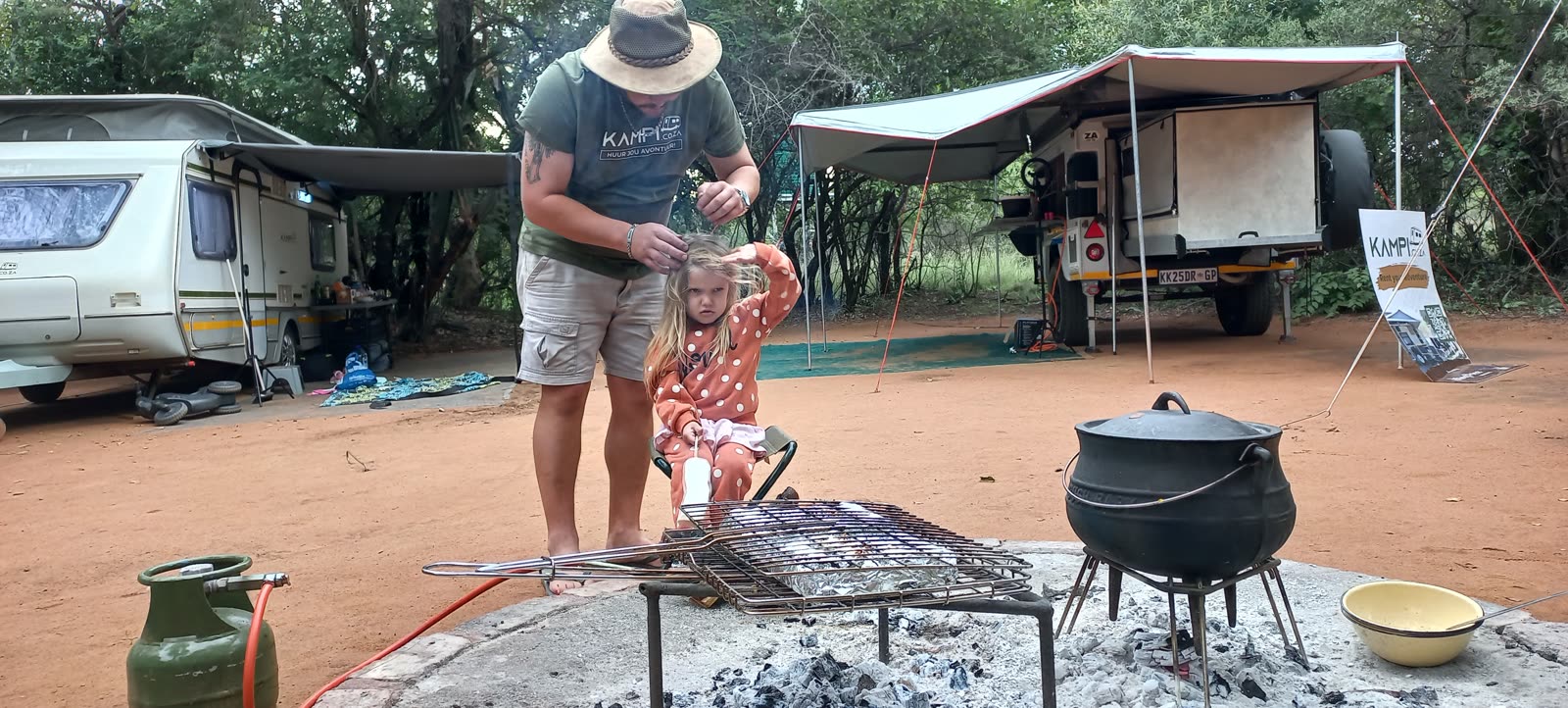
Wednesday 23 September is the last school day of the third term. Thursday 24 September is Heritage Day. Then there is nothing at all until Tuesday 6 October, when the kids go back for the last term of the year.
That is twelve days, and it is the last time this year the weather, the calendar and the price of a camper all line up. December is longer and warmer. December is also when the entire country remembers that camping exists.
Most people work this out around the 15th of September, phone three resorts, find them full, and end up at home. It is the first of September now. Three weeks is enough time to plan something properly, provided you decide today roughly what kind of trip you are actually taking.
So here are three, sorted by the only thing that really decides which one you can do: how many hours you are prepared to spend behind a tow bar.
The 2026 public school calendar closes term three on 23 September and opens term four on 6 October. All nine provinces run the same dates now, so there is no coastal and inland split to work around. Independent schools set their own calendar and usually run a week or so later, so check yours before you book anything.
Two shapes come out of that.
The short version: Heritage Day falls on a Thursday. Take Friday 25 September off and you have four days, Thursday to Sunday, for one day of leave. This is the Heritage Day weekend, and it is the busiest stretch of the whole holiday, because everybody without school-age kids is also going somewhere.
The long version: Thursday 24 September to Monday 5 October is twelve straight days. Almost nobody takes all of it, which is exactly why the second week is quieter and cheaper than the first.
If you have any flexibility at work, go in the second week. The Heritage Day weekend books out first, campsites empty around the 29th, and Aardklop in Potchefstroom (29 September to 4 October) and Rocking the Daisies in Darling (2 to 4 October) both land in that quieter half if you want an excuse.
Road caravan or off-road trailer. Thirty minutes to two hours from Pretoria or Johannesburg. Three to five days.
This is the trip that survives contact with reality. Nobody spends a day in the car, nobody gets carsick, and if you forget something you can buy it at the Spar in Bela-Bela.
Start with the malaria-free cluster. Dinokeng is about 50km from Pretoria and has actual game on it. Forever Warmbaths at Bela-Bela is roughly 110km up the N1 with 285 stands and nine ablution blocks, which matters more than it sounds when four families arrive at once. Loskop Dam is 162km from Pretoria with 236 stands, 210 of them powered. ATKV Buffelspoort is under an hour from both cities with 78 stands, all with power and a braai. Mabalingwe in the Waterberg has 70 stands and sits about two hours from Johannesburg.
Late September in the bushveld runs roughly 18 to 30 degrees by day with cool nights and almost no rain. It is the tail of the dry season, which is also why the game viewing is good: the bush is thin, the pans are down, and the animals are stacked up around whatever water is left.
Which brings up the fork that matters if you have small children. Kruger, Marloth Park and the low Mpumalanga bushveld sit inside South Africa's malaria districts, and late September is the start of the season when risk climbs again rather than the end of the safe part of the year. The NICD advisory is worth reading properly, and the conversation belongs with your doctor rather than with a blog. Dinokeng, Bela-Bela, the Waterberg, Loskop and Buffelspoort are all malaria-free, which is why they are the sensible answer for a family with a toddler.
"People pick the destination and then discover the drive," says JP Voogt, who started Kampi in 2021. "Do it the other way around. With a five year old, two hours is a trip and five hours is a punishment, and the bushveld an hour from Pretoria is still the bushveld."
There is almost nothing here you have to book months ahead, apart from the Heritage Day weekend itself. Kruger is the exception, and a real one. SANParks releases bookings eleven months in advance and the southern camps fill on the day they open, so check live availability before you get attached to Berg-en-Dal or Lower Sabie.
Suits first-time caravanners, families with children under six, and anyone who has four days rather than ten. Does not suit teenagers who have already been to Bela-Bela four times. Take them to the Waterberg instead, or further.
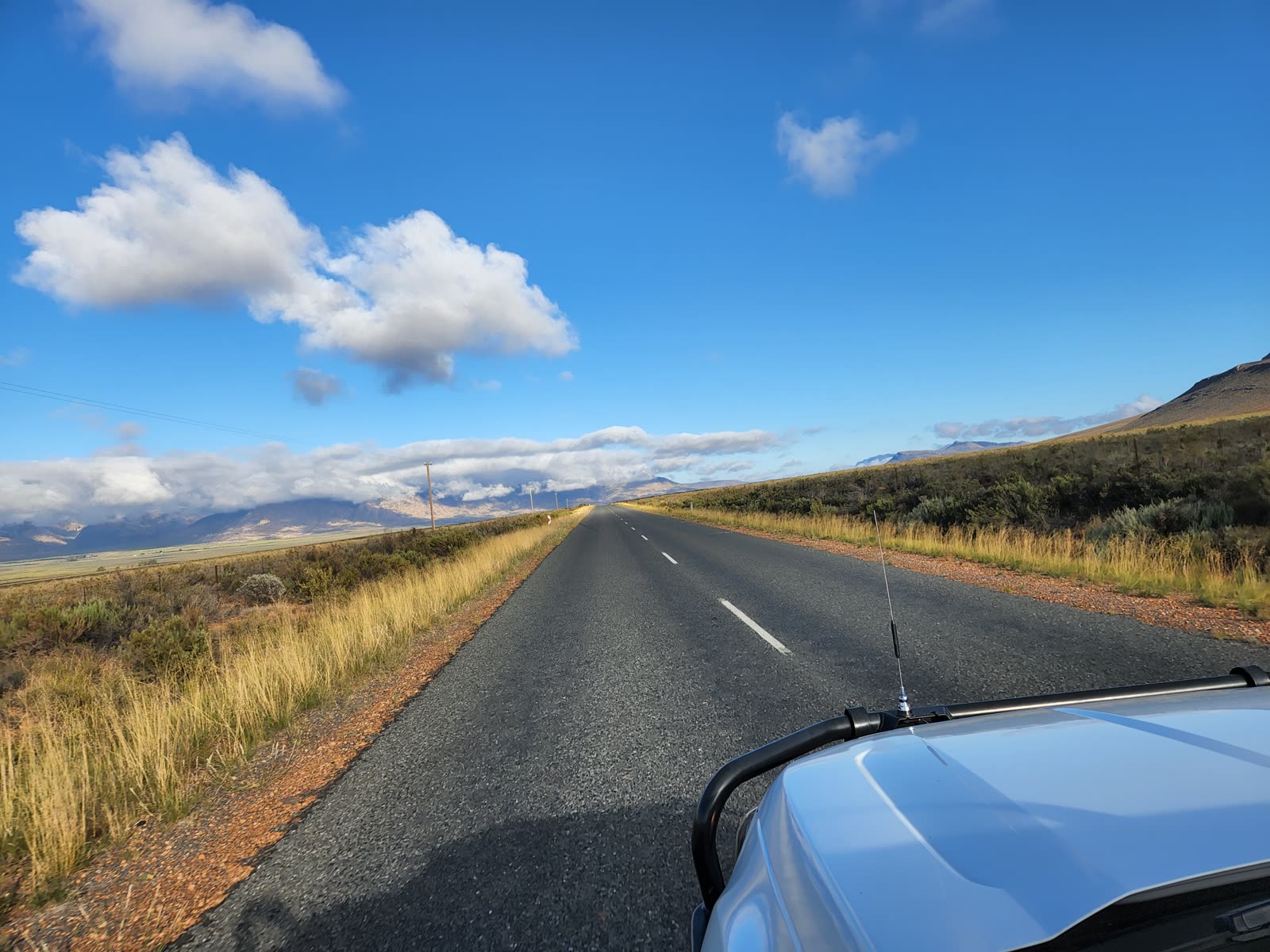
Caravan or hardshell rooftop tent, not a ground tent. One and a half to three hours from Cape Town. Three to six days.
2026 has been a heavy rainfall year on the west coast and the flower season has been reported as an exceptional one. That is the good news. Here is the part nobody puts in the brochure.
The Postberg section of West Coast National Park, the one that produces the photographs, is open from 1 August to 30 September and then shuts for the year. Gates are 9am to 5pm with last entry at half past four. So of your twelve days, Postberg covers the first seven and only the first seven. The statistical peak was mid-August to mid-September, which you have already missed. And the flowers themselves only open in direct sun above about 18 degrees, roughly from half past ten in the morning, so a cold grey day looks like an empty field no matter how good the season is.
That does not make it a bad trip. It makes it a trip you plan around flowers instead of for them. Blooms hold later the further north and inland you go, so Nieuwoudtville and the Skilpad section of Namaqua National Park are better late bets than Langebaan.
Bases you can reach in a normal tow vehicle on tar: Yzerfontein has a municipal caravan park roughly 97km from Cape Town with 121 stands on water and power, and Langebaan's municipal parks sit right against the national park boundary at about the same distance. Worth knowing before you plan it: there is no camping inside West Coast National Park itself, only chalets and a houseboat, so the caravan stands are in town. Further up the N7, Clanwilliam Dam gives you swimmable warm water, which the sea does not.
The sea here is genuinely cold. Langebaan lagoon barely reaches 20 degrees at the height of summer and Paternoster sits at 12 to 15 in September. Days run 18 to 21 degrees, nights drop to 10 or 11, there is around 60mm of rain spread across ten or twelve days, and the wind averages 20 to 25 km/h on an exposed coastline. That last one is the real constraint. A caravan or a hardshell rooftop tent shrugs it off. A cheap dome tent at Yzerfontein does not.
The Cederberg is the sheltered alternative and much better tent country. CapeNature's Algeria campsite has 48 sites at R200 off-peak for two people plus R65 a head after that. The access roads are gravel and get described as sedan-passable, which is true and also tells you nothing about the corrugations. It is towable if you are patient and your setup is sound. It is not where you learn to tow. Phone ahead about river crossings before you commit.
"Flowers are a bonus, not an itinerary," says JP. "Build a trip that is still worth doing on a grey Tuesday, and then let the flowers make it a good one."
Suits families who like driving and stopping, anyone chasing mountains and space, and campers with wind-worthy kit. Does not suit anyone who has promised the children swimming.
Road caravan or motorhome. Five hours from Cape Town, under three from Gqeberha, roughly fourteen from Johannesburg. Eight to twelve days from Gauteng, four upwards from the Cape.
The drive is the whole decision, so start there. Johannesburg to Mossel Bay is about 1,223km and just under 14 hours at car pace. Johannesburg to Knysna is roughly 1,146km and just under 12. Towing a loaded caravan is slower than that and involves more stops, so budget two driving days each way with an overnight at Colesberg, Beaufort West or Graaff-Reinet. Our Karoo road trip page has the stops if you go that way.
Four of your twelve days are therefore in the car. That is a fair trade if you have the full holiday. It is a terrible one if you have five days, and this is the trip most people over-reach on.
From Cape Town, at 5h22 to Knysna, or Gqeberha at 2h50, the arithmetic changes completely and this becomes the obvious choice.
What you get for the distance: late September is peak southern right whale season, not the shoulder. The whales run June to November with September and October the best of it, and the Hermanus Whale Festival lands on 2 to 4 October 2026, inside the holiday. Mothers and calves, close in, from the shore, for nothing.
Places to put the caravan. De Bakke Santos at Mossel Bay has 378 stands and two Blue Flag beaches, and its own 2026 rate card names our exact window: a standard stand is R320 a night in normal summer season and R390 from 23 September to 5 October, with sea-facing stands at R420 and R470. Keurbooms Lagoon at Plettenberg Bay has around 270 sites, 32 of them on the water's edge, and September falls in their cheapest band at R200 for one person plus R200 an adult and R130 a child under twelve. Buffelskop at Buffalo Bay is run by Knysna municipality with 85 stands, each with power, a tap and a braai, on one of the safer family beaches on that coast.
The SANParks camps, Ebb and Flow at Wilderness and Storms River Mouth in Tsitsikamma, are the ones everybody wants. Standard advice is to book them three to six months ahead for a school holiday, which as of today is advice you cannot act on. Phone and ask rather than assume. The Tsitsikamma suspension bridge went through a full rebuild during 2026 and was due back in service in August, so confirm with SANParks before you promise anyone a walk across it.
Free things that fill an afternoon: the Knysna Heads, the Map of Africa viewpoint above Wilderness, and the beaches. Robberg Nature Reserve at Plett is around R75 an adult and R55 a child at the gate.
Do not plan around swimming. Plettenberg Bay sits at roughly 17 degrees in September, Knysna averages 19 degrees by day and about 52mm of rain across the month, and the Garden Route has no dry season at all. Pack for four seasons and treat a warm afternoon as a gift.
Suits Cape and Eastern Cape families, and Gauteng families taking the full twelve days. Does not suit a Gauteng family with five days. You will spend four of them driving.
You do not need to compare the three. Answer these and one of them falls out.
Campers on Kampi belong to real people who take them camping themselves, which means they know things a rental desk would not. Use that.
Setting up an unfamiliar trailer in the dark is how relationships get tested. Ask the setup question.
There are 407 campers live on Kampi today across 271 owners. For the 23 September to 6 October window, 17 of them are booked out for the entire stretch. The other 390 have at least one open day in there, and 216 are completely open, so the picture on the first of September is a lot better than the one you get by phoning resorts.
Where they are: 236 in Gauteng, 126 of those in Pretoria alone, and 238 within 100km of the city. The Western Cape has 122, with 49 in Cape Town and 94 within 100km. The Garden Route is thinner: 19 within 100km of George. Worth knowing before you plan to collect down there. If you are going that way from up here, take the camper with you.
What they cost per day, as a median: a road caravan R799, an off-road trailer R650, an off-road caravan R1,200, a motorhome R2,200. The cheapest thing on the platform is R100 a day and the dearest is R3,500.
Two things that sit outside that daily number, and you should hear them from us rather than at checkout. 347 of the 407 campers carry a cleaning fee, and a service fee is added on top. All of it appears on one screen before you pay anything, which we wrote about in the price you see is the price you pay. And cover is not universal: 105 of the 407 are listed as self insured, which is not the same as insured. Read that part of the listing rather than assuming it.
On 404 of the 407 campers you send a request rather than a booking. The owner has three days to accept or decline, and nothing is charged until they say yes. Three listings are set to instant and go straight through to payment. If that distinction is new, we have a short explainer on it.
The practical consequence for this holiday: a request costs you nothing, so send two or three. Owners who are away themselves will decline quickly, and you will not have lost a week finding that out.
"September is the last honest holiday of the year," says JP. "Twelve days, decent weather, and nobody has doubled their prices yet. December is the one you fight for. This one you just have to remember to take."
Before you leave, run the departure checklist and check that the first aid kit has something in it. Then find a camper. Or, if there is one standing in your yard doing nothing for these twelve days, list it.