Plan your 4x4 camping trip to Botswana with a Mobi Lodge caravan. Border crossing documents, campsites like Kubu Island and Makgadikgadi, sand driving tips.
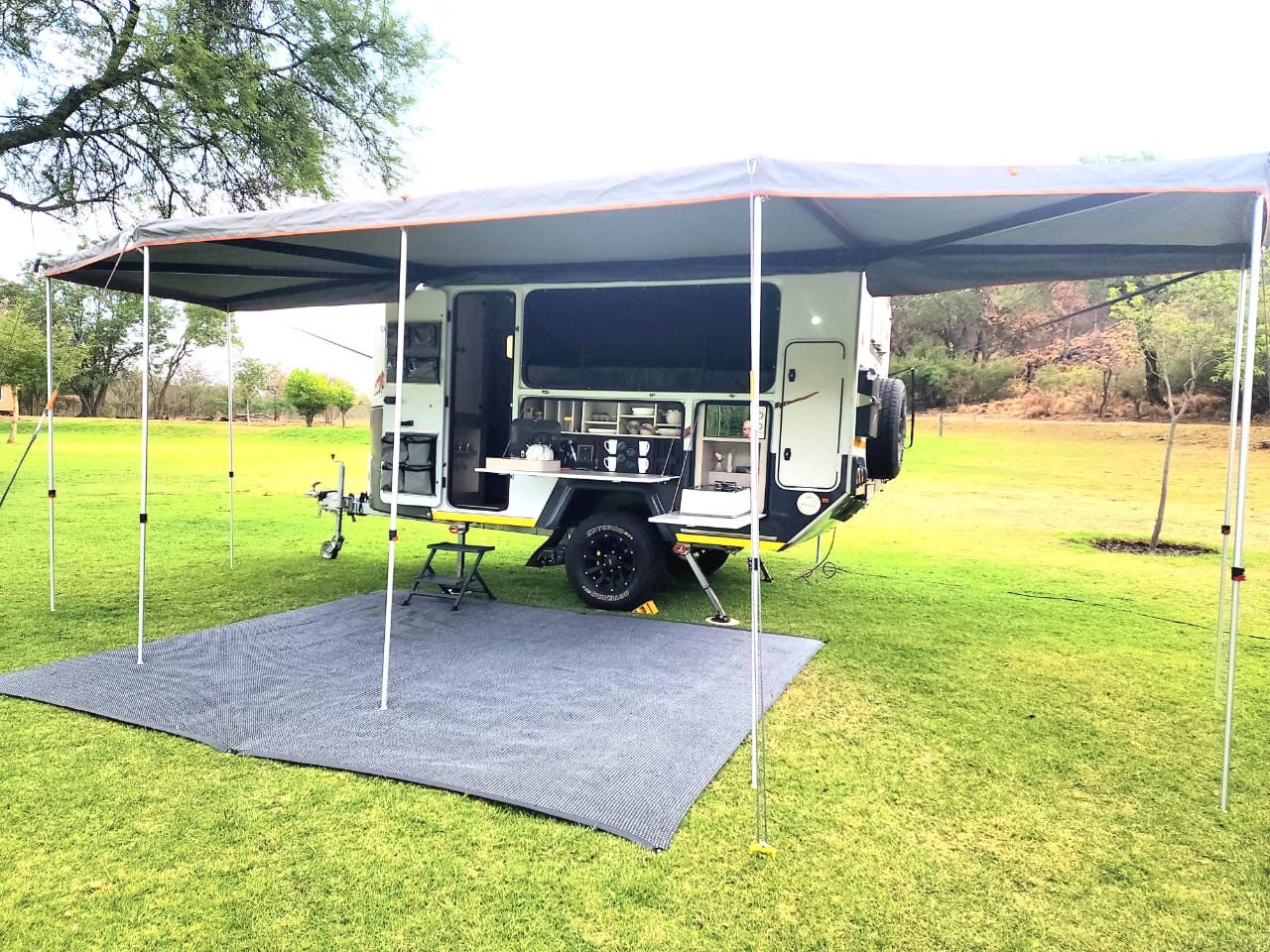
Botswana has some of the most remote wilderness in southern Africa. The Makgadikgadi salt pans, the Central Kalahari Game Reserve, the Okavango Delta, Moremi - these are places where tar roads end and sand tracks take over. Getting there with a camper trailer takes more than a cooler box and good intentions. You need border documents sorted, permits booked, enough water for days without a tap, and a rig that won't fall apart on corrugations.
This guide covers what you actually need to know if you're towing a camper trailer into Botswana. Real border posts, real campsites, real logistics.
The Mobi Lodge Continental is one of the more common off-road caravans you'll see on South African sand tracks. It handles Botswana's terrain - deep sand, corrugations, remote campsites with no facilities - without the weight penalty of larger rigs.
That 150L water tank matters in Botswana. Most bush campsites have no running water, and you'll burn through at least 5 litres per person per day just for drinking and cooking. In summer, double that. A couple travelling for 5 days will use 50-70 litres on basics alone, so the Continental gives you decent range before you start rationing.
If you want something lighter, the Mobi X weighs around 760 kg with a 2.5-ton axle and long-travel springs. It starts at roughly R237,000 and is the entry point into the range. The Quattro sits at the top for those who want the full luxury setup.
You can rent a Mobi Lodge on Kampi from owners in Cape Town, Pretoria, and Tshwane. No need to buy one to find out if Botswana is for you.
This is where first-timers get caught. Botswana border posts are efficient but strict on paperwork. Miss one document and you turn around.
If you're renting a camper trailer through Kampi, arrange the cross-border letter with the owner well in advance. Most owners who allow cross-border trips will sort this for you, but ask before you book. Don't pitch up at handover expecting the paperwork to appear.
A Carnet de Passage is not required for Botswana, which simplifies things.
Coming from Gauteng, the common crossings are:
The Makgadikgadi is one of the largest salt flats in the world. In the dry season, the pans are a flat white expanse stretching to the horizon. When the rains come, they fill with shallow water that pulls in flamingos and zebra herds.
Park entrance fees: P120 per person plus P50 per vehicle.
Ancient baobab trees growing out of granite, surrounded by an ocean of white salt pan. One of those places that looks photoshopped but isn't. Managed by the Gaing O Community Trust.
Access from the north via Nata or Gweta takes 3-4 hours. From the south via Mmatshumo is easier and works for less experienced 4x4 drivers.
The closest Kalahari experience to Gaborone, about 210 km north. Budget 3-4 hours for the drive.
Botswana's top-tier wildlife areas. Third Bridge in Moremi is the campsite everyone wants - book through the Department of Wildlife and National Parks (DWNP) months in advance if you're going in dry season. The Central Kalahari Game Reserve (CKGR) is one of the world's largest protected areas, and you can drive for hours without seeing another vehicle.
Fill up at every town. Maun, Nata, Kasane, and Francistown have fuel stations, but once you leave tar roads, there's nothing. Carry jerry cans. If you're heading to Khutse, Letlhakeng is your last fuel. For Kubu Island, fill up in Nata or Gweta.
At least 5 litres per person per day, more in summer (8-10 litres). Keep a 20-litre emergency reserve on top of whatever your trailer tank holds. Most bush campsites have no water supply at all.
Forget Google Maps once you leave the tar. Use Tracks4Africa maps loaded on a GPS with offline capability. Mark waypoints for fuel stops, campsites, and key turns. Cell signal disappears fast outside towns - sometimes within 20 minutes of the last mast.
A satellite communicator like the Garmin inReach Mini 2 is worth the money (available from Tracks4Africa, around R5,000-R8,000). It runs on Iridium's satellite network for SOS alerts and two-way messaging. No cell towers needed. Pack UHF two-way radios for convoy communication too.
Botswana is sand. Lower your tyre pressures before the sand tracks, typically 1.2-1.6 bar for deep sand depending on tyre size and vehicle weight. Keep momentum steady, don't brake suddenly, don't make sharp turns. Re-inflate when you get back on tar. You need a portable compressor - ARB units run up to 100 PSI and come with a carry case and battery clamps.
Dry season (May to October) is best for 4x4 camping. Animals concentrate around water, tracks are passable, and the weather is comfortable. July and August are peak months with cool nights. The wet season (November to April) brings green landscapes and migratory birds, but many tracks flood and some campsites close entirely.
You don't need to own a caravan to do Botswana. On Kampi, you can rent a Mobi Lodge Continental, Echo, Conqueror, or other off-road camper trailers from owners across South Africa. Prices start from around R519/day with insurance included, and most come kitted out for bush camping.
Read our departure checklist before you leave, and check the EB license guide if you're unsure about towing requirements. Not keen on towing at all? Browse Code B campers that don't need an EB license.
Sort your paperwork, pack enough water, load Tracks4Africa on your GPS, and the Kalahari will handle the rest.
Yes, if the owner agrees. Confirm cross-border use before booking and collect the cross-border letter, registration, and police clearance if applicable.
Passport, driving licence, vehicle registration, cross-border letter from the owner, and ZA sticker. Third-party insurance at the border is mandatory.
Moremi (Third Bridge, Xakanaxa), Chobe (Savute, Ihaha), Nxai Pan, and Central Kalahari all handle off-road trailers well. Tar is limited, 4x4 is essential.
Coverage varies by owner. Confirm in writing before booking and arrange supplementary cover if needed.