Stand, chocks, level, steadies, then power, gas and water. The setup order that means you only do it once, and why corner steadies are not jacks.
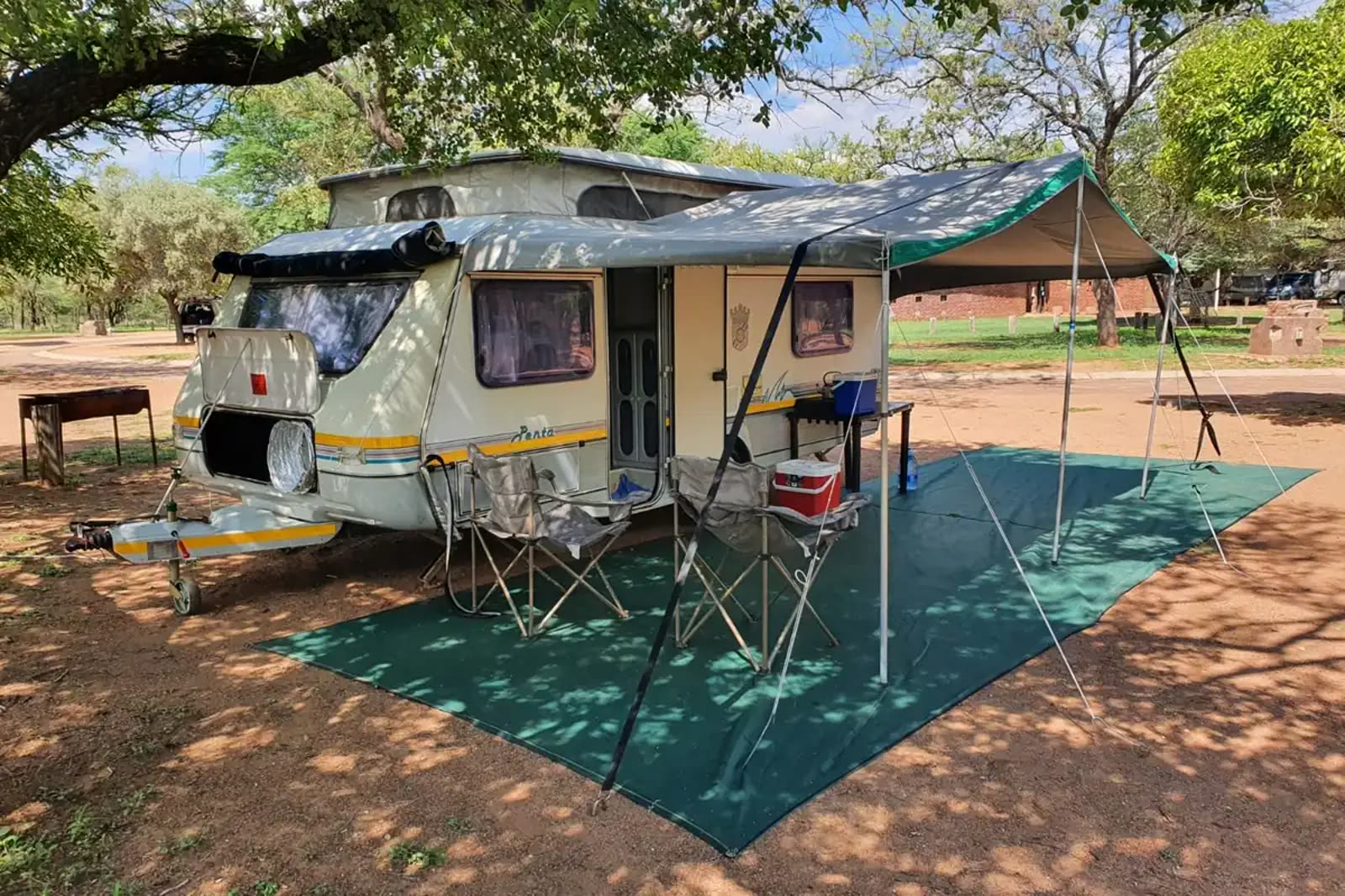
You made it. The caravan is behind you, the stand is in front of you, and everyone in the car wants to get out at the same moment. So you do what most first-timers do: jump out, wind the corner steadies down, plug in the power, and only then notice the caravan is leaning like a Karoo windpump. Now everything comes up again.
Setting up has an order. Follow it and you do the job once.
This is post five in our weekly series built on Kampi Guides, the free library for first-time caravan renters. We have covered what you may tow, the drive, collecting the caravan and reversing it onto the stand. This week: arriving at the campsite and setting up. In Afrikaans: Aankoms en opslaan.
Give yourself an hour the first time. It gets quick after that.
"Stand, chocks, level, steadies, then power, gas and water. Say it in the car on the way in," says JP Voogt, Kampi's founder. "The people who get it wrong are not the slow ones. They are the ones in a hurry to get the braai going."
Ask at the office which stands are open, then walk them before you commit. You want morning sun and afternoon shade. Work out where the wind comes from, because the caravan's body should sit between the wind and the tent. Skip the lowest patch of ground, which is where the rain ends up, and look up for dead branches. The stand on the ridge with the view is also the windiest one in the park.
Then the practical bits: close enough to the ablutions to walk there in the dark, far enough that the door does not bang all night, and a way out you can drive forward on the morning you pack up in the rain.
Pull the caravan's handbrake all the way up. The AL-KO chassis handbook is blunt: the handbrake only re-applies the brakes on a backwards roll when the lever is fully upright. Half way is not on. Chock both wheels before you unhitch, not after, and leave the chocks in for as long as the caravan stands.
Side to side comes first, while you are still hitched, because the bakkie can drive the low wheel onto a ramp for you. Spirit level across the floor, low wheel up the ramp, check again, chock. Now unhitch. Front to back is the jockey wheel: wind it until a level on the A-frame reads flat.
Only now do the corner steadies come down, and only until they bite.
Corner steadies are not jacks. The AL-KO handbook says so in capitals, and the forum threads about cracked floors and doors that stopped closing explain why. Lifting on them twists the chassis and splits sealant. They stop the rocking. That is all.
"If there is one thing I would tattoo on every renter's hand, it is that the steadies are not jacks," says JP. "Owners can tell from the floor whether the last renter knew that."
Why bother levelling at all? Mostly the three-way fridge: an absorption fridge needs to sit within about 2.5 degrees of level or it stops cooling properly. Level also means the door closes, the sink drains, and nobody slides out of bed.
South African caravan parks fit a blue 16 A round socket on the power point. If the caravan's lead ends in an ordinary three-pin plug, you need a 16 A to three-pin adaptor. Find that out at handover, not at the park at dusk.
A tingle off the door frame, step or tap is a fault, not a quirk. Switch off at the power point, unplug, and do not use that connection until the owner or the park has checked it.
The cylinder lives outside the living space, upright in a vented locker. SANS 10087-2, the caravan gas standard, says it may not be installed inside the caravan, and the locker vents sit low because LPG is heavier than air. Never block them.
Before you open the cylinder, check the bracket is tight and the regulator's washer is there and not perished. Open the valve slowly, then brush soapy water onto every joint you touched. Bubbles mean a leak: close the valve, remake the joint, test again. Leave the wall vents open, even on a cold night when every instinct says tape them shut.
Fill the fresh tank or connect the hose and run the pump at the tap until it stops spitting. Ask reception where the dump point is while you are there. Get the fridge going now, on mains or gas; on 12 V it only holds temperature, and pulling a warm fridge down to cold takes hours.
The tent or awning goes up last, on the side away from the wind, with heavy-duty pegs and storm straps at a wide angle. The commonest awning failure is not the wind. It is not enough pegs. If it is already blowing hard, leave the awning in the bag. And a tent gives you no protection in a thunderstorm: if lightning is close, get in the bakkie.
Every park has its rules on a board at reception, and they differ. ATKV resorts, for example, enforce quiet from 22:00 to 07:00, allow no music systems and no pets except guide dogs. SANParks camps check you in from 14:00, out by 10:00, and do not let you collect firewood. Read the board. The unwritten rules are simpler: do not walk through other people's stands, and say hello. Caravan parks run on neighbours.
Looking for somewhere to try all this? Our Plaas Toe in Dinokeng write-up covers one of our favourite spots close to Gauteng, and the Kruger road trip page covers the SANParks camps.
Kampi's 48-hour pre-trip list asks you to confirm the gas cylinders are in date and the brackets secure, the water tank flushed and the pump tested, and the stabilisers and jockey wheel greased. Put the 16 A adaptor in the caravan and tell the renter where it is. And if your steadies have ever been used as jacks, the owner maintenance checklist tells you where to look for the damage. The full list is in Kampi Care.
Next week: living in a caravan for a weekend, including why the kettle keeps tripping the box. The full library:
Then find a caravan near you. With summer coming, pick a stand with afternoon shade. Your fridge will thank you.
Kampi Guides are general information, not legal advice. Check the regulations and your own vehicle's plate before you tow.