AfrikaBurn 2026 - Tankwa Karoo

AfrikaBurn 2026 - Tankwa Karoo

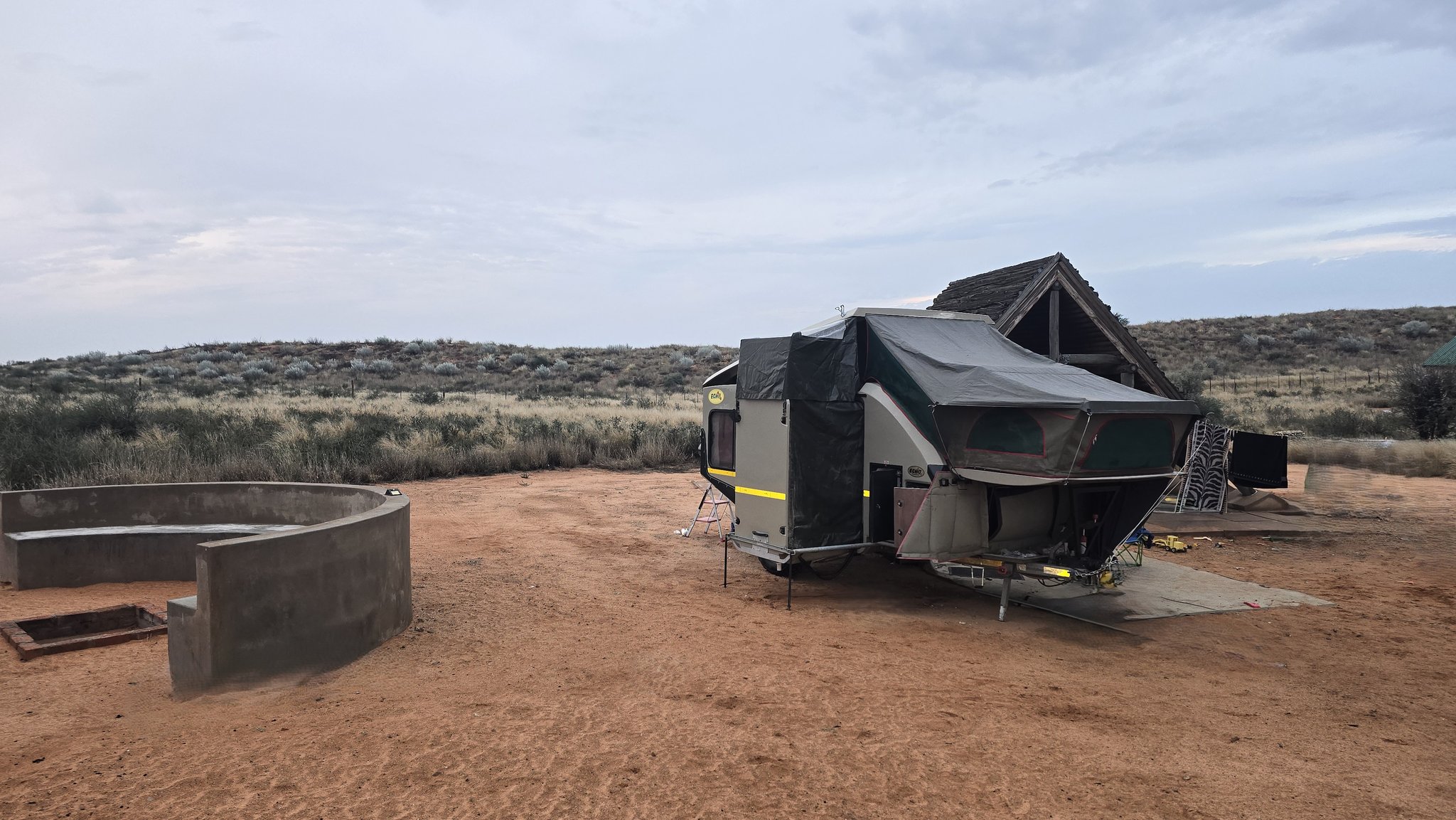
AfrikaBurn 2026 runs from 27 April to 3 May on Stonehenge Private Reserve, Tankwa Karoo. No water, no shops, no signal. You bring everything in and carry everything out. A Kampi off-road camper keeps you self-sufficient for the full week.

Your AfrikaBurn 2026 basecamp, sorted

AfrikaBurn is Africa's largest leave-no-trace event, held every autumn on Stonehenge Private Reserve deep in the Tankwa Karoo. There are no showers, no shops, no cell signal, and absolutely no water on tap. What you bring in, you carry out, including every scrap of grey water and every cigarette butt. A properly prepped camper is the single biggest factor between a magical week in the dust and a brutal one where you are counting the hours until you can leave. On Kampi we see the same off-road trailers and 4x4 campers return to Tankwa year after year with renters who have the prep list down to a science.

Why a Kampi camper beats a tent at Tankwa

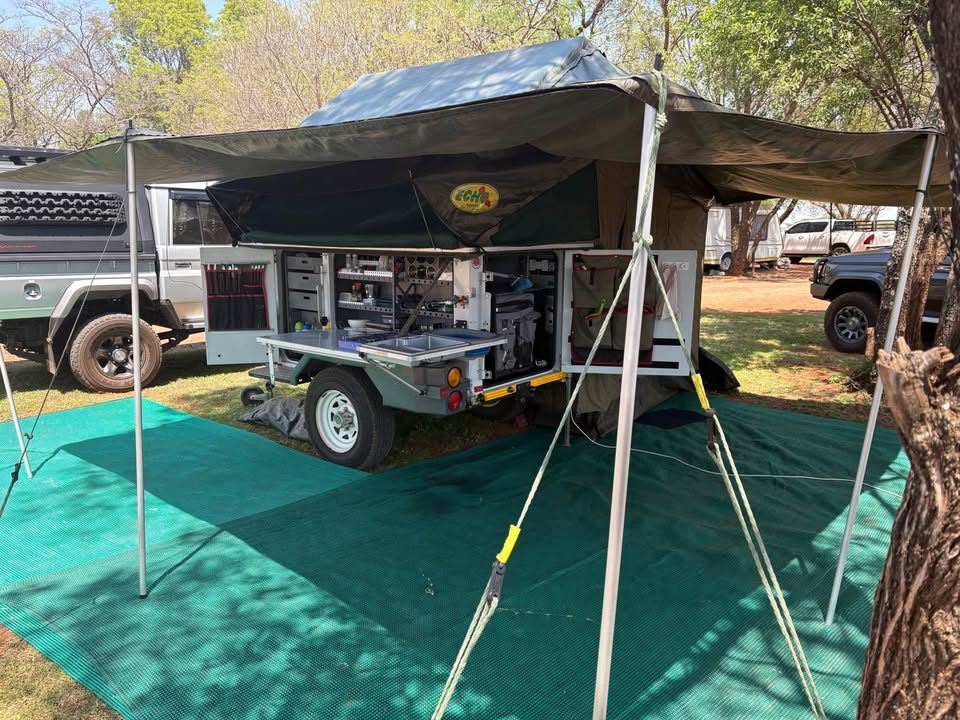
Daytime temperatures regularly push past 35 degrees Celsius, and desert nights drop close to freezing once the sun sets behind the Cederberg. Wind is the constant. It rattles tents, flattens gazebos and turns loose dust into a full face scrub. A camper keeps your bed clean, your food cold and your water supply protected. You get solar battery power, a gas stove, a real mattress and proper insulation against the Karoo sand. Many of our off-road units come equipped with 80 to 100 litre water tanks, 40 to 60 litre compressor fridges, and side awnings that double as a communal kitchen for your theme camp. After a long night at the Binnekring or out at a sound camp, crawling into a closed camper with a real pillow is worth every rand.

Getting to Tankwa Town

The R355 from Ceres is the busiest approach and the one most first timers use. Expect roughly 180 km of gravel, washboard corrugations and bulldust in the dry months, with no fuel between Ceres and Tankwa Tented Camp. Top up in Ceres, carry a 20 litre jerry can if your vehicle runs lean, and drop tyre pressures before you commit to the dirt. Speak to your Kampi host about recommended tow pressure, a puncture plug kit and basic recovery gear before you leave their yard. We strongly recommend off-road trailers or 4x4 ready campers for the R355. Road caravans and lightweight pop tops should only attempt Tankwa via the R356 from Calvinia, which is better graded but adds driving time if you are coming from Cape Town or Gauteng. From Cape Town plan on 7 to 8 hours door to gate. From Gauteng plan on splitting the drive over two days with an overnight stop in Beaufort West or Sutherland.

Self-sufficiency checklist

Plan on 5 litres of water per person per day for drinking, plus another 3 to 5 litres for cooking, rinsing and basic washing. For a couple staying the full burn that is comfortably 120 litres of water, which is why the onboard tank on an off-road trailer matters so much. Bring enough food for the whole week, a proper first aid kit, high SPF sunscreen, ski goggles or dust specs for the inevitable dust storms, a headlamp with spare batteries, a second headlamp when the first one fails, and a sturdy pair of closed shoes. Kampi insurance covers the camper itself against damage and theft, but a gazebo lifting off in a gust and flattening your neighbour's art car is on you. Secure everything. Peg everything. Pressure test your gas at home before you load up.

Theme camps, art cars and living on playa time

AfrikaBurn runs on a gift economy. You are not buying a festival ticket that includes entertainment. You are showing up to contribute, whether that is a theme camp offering coffee at dawn, a mutant vehicle that roves between camps, or a performance at the Clan. Your Kampi camper becomes part of your camp's infrastructure. A trailer with a large awning can shade a gifting bar. A camper with a big water tank can keep a theme camp's dishwashing station running. Talk to your camp lead before the burn about what you will bring and where the camper will sit in the layout. Remember that egress (the day everyone leaves) is when rules slip. Pack out every peg, every zip tie, every piece of MOOP (matter out of place) no matter how small.

Booking your 2026 camper

AfrikaBurn tickets go on sale in October the year before the burn, with a ballot system for the main release. Kampi sees a predictable booking spike the week tickets drop. Off-road trailers out of Cape Town, Paarl and Stellenbosch get snapped up first because of the short tow to Ceres. Northern Cape owners (Calvinia, Kenhardt, Upington) are next and often include local knowledge of the R356 approach. Gauteng listings remain available later but require a two day drive in and a two day drive out, which pushes your rental window closer to 12 days. Lock in your Kampi booking within a week of receiving your ticket confirmation. Owners respond within 48 hours, payment runs through PayFast, and your dates are blocked the moment the first installment clears. Insurance is included from R89 per day plus the once off R189 admin fee, and most owners hold a refundable deposit of R5,000 to R10,000 for Tankwa bookings given the terrain.

Campers available for AfrikaBurn 2026 - Tankwa Karoo

Frequently Asked Questions

How far is AfrikaBurn from Cape Town and Johannesburg?
From Cape Town to Stonehenge Private Reserve is roughly 360 km via Ceres and the R355, which is 7 to 8 hours of actual driving time once gravel speeds drop you to 60 to 70 km/h. From Johannesburg plan on 1,400 km broken over two days, with an overnight stop in Beaufort West or Sutherland to keep tow vehicle and driver fresh. The last 180 km on the R355 is the part that eats time. Budget for a slow, patient approach rather than trying to push through in a single day from Gauteng.
Can any camper go to AfrikaBurn?
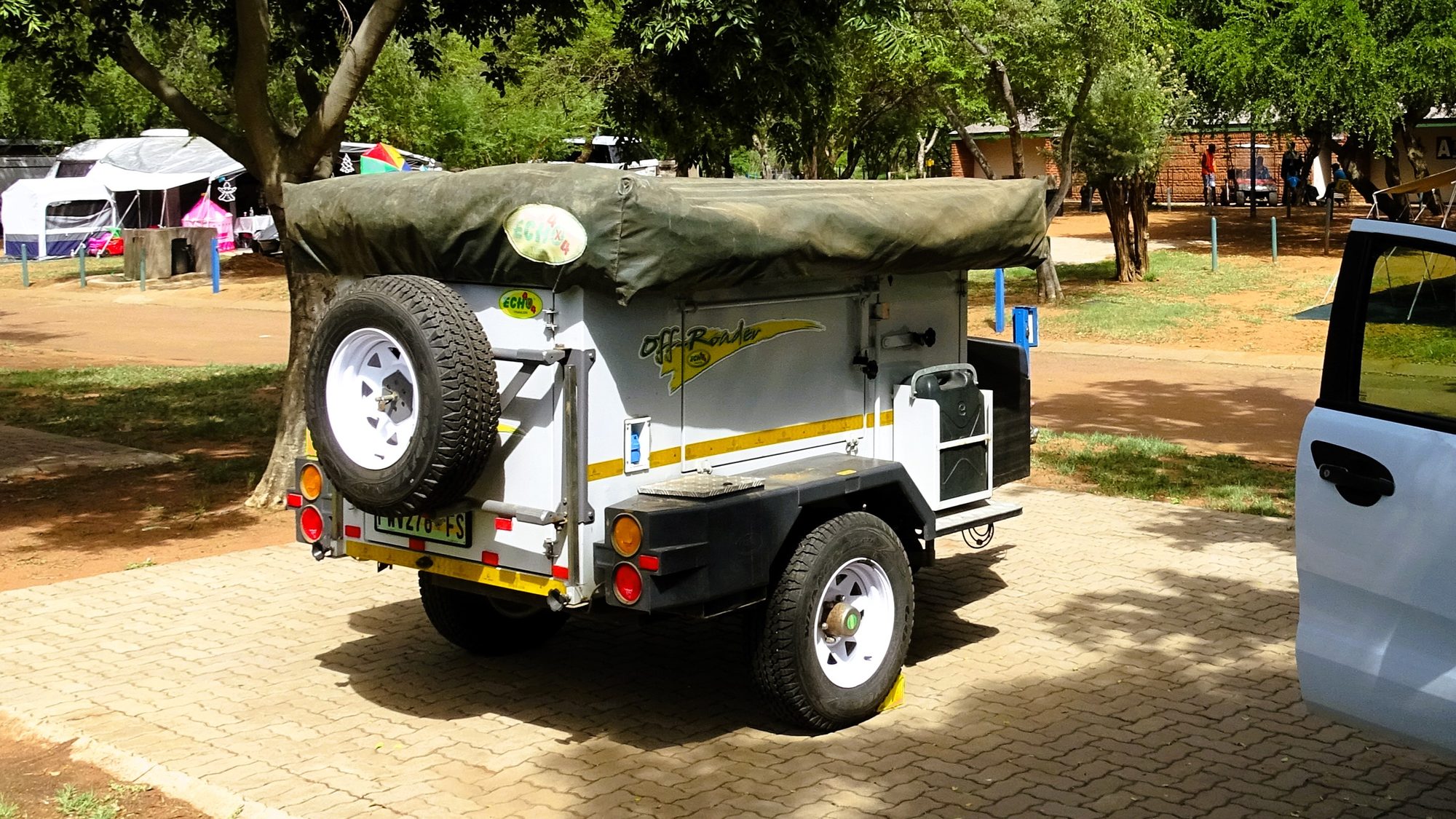
No. The R355 gravel road is rough, remote and unforgiving on road suspension. Choose an off-road trailer or a 4x4 ready camper with ground clearance above 300 mm and heavy duty tyres rated for sidewall damage on sharp stones. Lightweight road caravans routinely lose leaf springs, crack jockey wheels and split chassis welds on the Tankwa run. Every Kampi listing flags 4x4 capability, axle type and suspension under the specs tab so you can filter before you enquire.
Do Kampi campers include solar and batteries for off-grid use?
Most off-road trailers on Kampi are set up for multi day off-grid use. Typical specs include one or two 100 Ah deep cycle batteries (AGM or lithium), 120 to 300 W of roof or portable solar and a small pure sine inverter for charging laptops or camera gear. Read the listing carefully before you book: plan for a 40 litre compressor fridge pulling around 30 Ah over 24 hours, plus another 10 to 15 Ah for lights and phone charging. If the listing only shows 80 Ah of battery and no solar, bring a portable panel or expect to run the tow vehicle to top up.
What about water, gas and waste handling on playa?
Off-road trailers on Kampi typically carry 60 to 100 litres of fresh water and a 4 or 9 kg gas bottle. You must bring all drinking water in (buy bottled or fill from a trusted municipal source), and you must carry every drop of grey water out. Most renters bring a second 25 litre jerry can and a grey water container per two people. Kampi does not supply water bladders, so add them to your prep list along with refuse bags, a pee funnel for the ladies and a small shovel.
Do I need an EB license to tow a 4x4 trailer to AfrikaBurn?
It depends on the GVM of the trailer and the combined mass of the rig. Off-road trailers with a GVM under 750 kg can be towed on a standard Code B license. Larger units like full size Conquerors, Echo 5s, bigger Jurgens caravans and most family sized off-road caravans require an EB license. Every Kampi listing shows the required license type at the top of the page. If you are unsure, message the owner before booking. They will not hand over the keys if your license does not match the trailer.
How much does it cost to rent a camper for AfrikaBurn?
Off-road trailers start from around R800 per day on Kampi, with most serious Tankwa rigs sitting between R900 and R1,500 per day. Add R89 per day Kampi insurance and the once off R189 admin fee. A typical AfrikaBurn trip runs 9 to 11 days including travel from Cape Town, so budget R11,000 to R18,000 for the camper rental alone. From Gauteng stretch that to 12 to 14 days, so expect a rental closer to R15,000 to R22,000. Factor in a refundable deposit of R5,000 to R10,000 which is returned after the post trip inspection.
When should I book my camper for AfrikaBurn 2026?
As soon as your ticket is confirmed. The best off-road trailers for the burn are booked out by December or early January for the following April. Cape Town and Stellenbosch owners go first, Northern Cape next, and only Gauteng listings remain in any volume by February. Kampi calendars fill fast once the ticket ballot results drop, so do not wait for perfect trip planning before you secure the rig.
Is AfrikaBurn family friendly? Can I bring kids?
AfrikaBurn does welcome families and there is a dedicated Kid Kamp theme camp every year, but the environment is harsh. Extreme heat, cold nights, dust storms and a 180 km gravel road in and out are real challenges with small children. Older kids (10+) who handle heat and self sufficiency well usually do fine. Toddlers are a big ask. If you are bringing children, pick a larger off-road camper with a proper bed, extra shade and a second battery for a fan. Always talk to the owner about your specific plan so they can recommend the right rig.
How does payment and the deposit work on Kampi?
Once the owner approves your request you pay the full rental, insurance and admin fee through PayFast. The refundable damage deposit is held separately and is typically R5,000 to R10,000 for AfrikaBurn bookings. The deposit is reconciled after the post trip inspection. As long as the camper comes back in the same condition (fair wear and tear and dust excepted), the deposit is refunded to your account within 5 to 7 working days. Kampi holds the deposit in escrow so you are not chasing the owner if there is a dispute.
Can I do AfrikaBurn as a day trip instead of staying on playa?
Officially no. AfrikaBurn is a ticketed participant event, not a spectator day pass. Everyone entering Stonehenge Private Reserve needs a ticket and everyone is expected to contribute. If you only have a few days, the closest staging towns are Ceres and Calvinia, both of which have campsites where you can pre position a Kampi camper. But the value of AfrikaBurn is in the nights, the dawns and the slow rhythm of playa time. A day trip will not give you that, and you will spend 14 hours on the road for it.

Visit official event website